

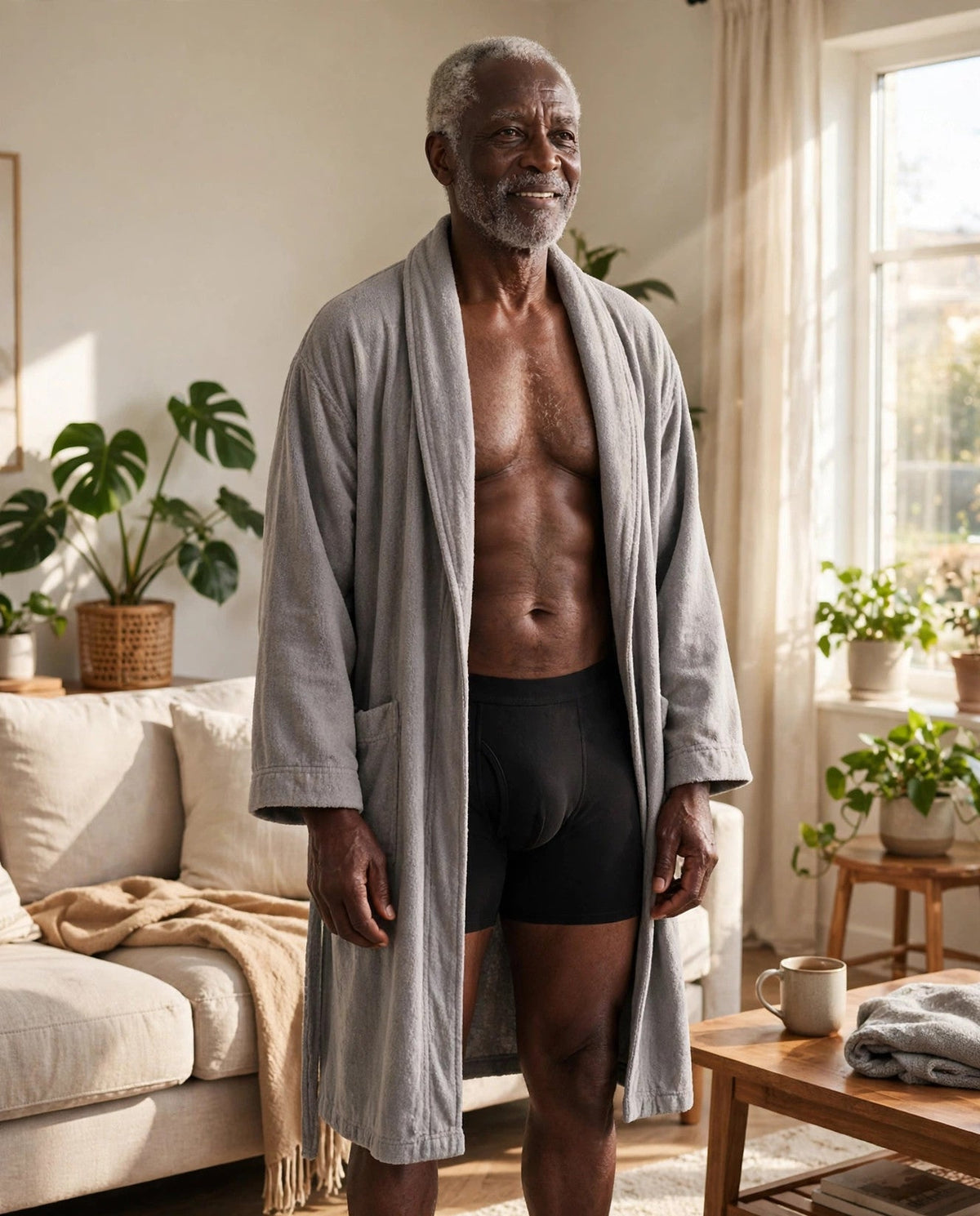
The short answer: well-made incontinence underwear should not cause skin irritation for most people — but staying in wet protection too long, wearing the wrong size, or using worn-out layers can lead to rashes, chafing, or moisture damage. Changing into dry underwear regularly, choosing breathable fabrics and the right fit, and washing them properly are the three things that protect your skin.

If you've been asking yourself, "can incontinence underwear cause skin irritation," you're not alone. It's one of the most common concerns people have when switching from disposables to reusable leakproof underwear. The honest answer is that skin problems are rarely caused by the underwear itself — they're usually caused by how it's used. Here's what actually irritates skin, and how to keep yours healthy.
Why Skin Irritation Happens With Incontinence Products
Healthy skin has a natural barrier of slightly acidic oil (the "acid mantle") that keeps out moisture and bacteria. Urine is the main enemy of that barrier: it raises the skin's pH, softens the outer layer, and makes skin more vulnerable to friction. When skin stays damp for hours, it can develop what doctors call incontinence-associated dermatitis — redness, itching, or a raw feeling in the areas that touch wet fabric. That risk exists with any absorbent product, disposable or reusable.
The good news: reusable leakproof underwear is designed with a moisture-wicking inner layer that pulls liquid away from the skin and locks it into absorbent core layers. As long as the absorbent core isn't overwhelmed and the underwear gets changed on a reasonable schedule, skin stays drier than it does with many other options. Most skin complaints trace back to one of four fixable causes:
- Waiting too long between changes. Every product has a limit. A light-leak day may need only one or two changes; heavy days need more. Once the absorbent layer is saturated, moisture sits against the skin.
- The wrong size. Underwear that's too tight creates friction at the leg openings and waistband; too loose lets the absorbent panel shift away from where leaks actually land, leaving wet spots in the wrong places.
- Worn-out absorbent layers. Reusable underwear lasts a long time, but after hundreds of washes the waterproof and wicking layers can thin. If your pair doesn't feel like it used to, it may be time to refresh your rotation.
- Residual detergent or scent. Some laundry detergents and fabric softeners leave coatings on fabrics that irritate sensitive skin and reduce absorbency. This is a washing issue, not a product issue.
Irritation or Something Else? A Quick Comparison
Not every itch or redness is the underwear's fault. Use this quick guide to tell common causes apart — and see our detailed breakdown in UTI vs. Incontinence: How to Tell the Difference for more on urinary symptoms.
| Symptom | More likely cause | What helps |
|---|---|---|
| Redness or mild itching exactly where the absorbent panel sits | Moisture sitting against skin too long | Change more often; check the absorbent layer isn't saturated |
| Red lines or soreness at waistband or leg openings | Friction from the wrong size | Re-check your size; the panel should sit flat with no digging |
| Itching plus burning when you pee | Urinary tract irritation — see a doctor | Not a product problem; get checked promptly |
| Redness after switching detergent | Fragrance or coating residue | Wash with a mild, fragrance-free detergent; skip fabric softener |
| Irritation that spreads or has blisters | Skin infection or dermatitis | See a doctor rather than changing products |
Five Habits That Keep Skin Healthy
1. Change on a schedule, not just when you feel wet
Quality reusable underwear can feel surprisingly dry even when the core is working hard — that's the wicking layer doing its job. But feeling dry doesn't mean unlimited capacity. A practical rhythm: one fresh pair in the morning, one midday if your leaks are moderate, and one before bed. Keep a spare in your bag (a waterproof carry pouch keeps the used pair sealed and odor-free) so you're never tempted to stretch one pair through a long day. For the mechanics of a discreet swap, see How Do You Change Incontinence Underwear in a Public Restroom?
2. Get the fit right
Skin-friendly fit means the absorbent panel stays where leaks land and the elastic lies flat without digging. If you're between sizes, most people do better going up rather than down — gentle leg openings prevent the chafing that tight elastic causes. Men who deal with post-void dribble or prostate-related leaks can look for a cut designed for their body, like men's washable incontinence underwear with a wider front panel, which keeps moisture centered instead of creeping toward the edges.
3. Wash them so they stay absorbent — and gentle
Washing is where most skin-friendliness problems start. Use a mild detergent, skip fabric softener and dryer sheets (they coat fibers and trap moisture against skin), and rinse thoroughly. A machine-wash laundry bag protects the absorbent layers so they keep wicking the way they're meant to. Full instructions are in How to Wash and Care for Reusable Bladder Leak Underwear.
4. Let skin breathe overnight
Nighttime is when skin is most at risk, because one pair sits in place for hours. If you wake damp, your absorbency level may not match your night's output — check whether a higher-absorbency option or an extra absorbent pad (for example a reusable absorbent pad inside underwear with a removable pad) fits your routine better. More on matching protection to the night in Male Urinary Incontinence at Night and Why Do I Leak Urine While Sleeping?
5. Replace pairs that have retired
Reusable underwear is built for hundreds of washes, but it's not immortal. When the inner surface stops wicking, when the outer layer feels thin, or when leaks start escaping where they didn't before, the pair is past its prime — and worn layers are a common cause of new skin irritation. Learn the telltale signs in How Long Do Reusable Incontinence Underwear Last?
When to See a Doctor
Most mild redness clears up within a day or two of changing habits. Book a visit if irritation doesn't improve after a few days of fresh, well-fitted pairs; if you notice blisters, cracked skin, or spreading redness; or if irritation comes with burning when you pee, fever, or a strong new odor — those can signal a urinary or skin infection that no product can fix. Older adults and people with diabetes should be quicker to seek help, since skin heals more slowly (see Urinary Incontinence and Aging).
FAQ
Can incontinence underwear cause yeast infections?
Prolonged dampness can encourage yeast growth, especially in warm weather — but the underwear isn't the direct cause; sitting in any wet material for hours is. Changing into dry underwear regularly, choosing breathable cotton-blend layers, and sleeping without a damp pair on reduce the risk. If you get recurrent infections, talk to your doctor rather than switching products blindly.
Can incontinence underwear cause a UTI?
There's no evidence that leakproof underwear itself causes urinary tract infections. UTIs come from bacteria reaching the urinary tract. What matters is hygiene: change promptly after leaks, wash pairs thoroughly, and wipe front to back. If UTIs keep returning, the cause is usually medical, not your underwear.
Is it bad to sit in wet incontinence underwear all day?
Yes — this is the single biggest skin risk. A saturated absorbent layer presses urine against skin for hours, raising pH and softening the skin barrier. One pair per full day only works for very light leaks; moderate leaks call for at least one midday change.
Should I change my incontinence underwear before bed?
Always put on a fresh pair before bed, even if the one from the evening seems "still okay." Nighttime leaks sit against skin the longest, so starting the night dry and with full absorbency capacity gives your skin the best chance. If you wake up wet regularly, you need a higher-absorbency option for the night.
Can incontinence underwear cause rashes on the legs?
Rashes at the leg openings are almost always a fit issue — elastic digging in and creating friction — or a sign the absorbent panel has shifted and leaks are pooling at the edges. Re-check your size and make sure the panel sits centered. A wider men's cut or a higher-rise women's cut often solves edge pooling for good.



Share:
Can People Tell You're Wearing Incontinence Underwear? Tips for Staying Discreet
How to Tell Your Partner About Bladder Leaks: A Calm, Practical Guide