


The short answer: Empty your bladder before you leave, wear leakproof underwear you trust, and sit on the aisle near the back. Pack a spare pair and a small pouch. That's how to manage bladder leaks at a funeral — the rest is knowing the tricky moments before they happen.
A funeral is the last place you want to think about your bladder. You're grieving. You're trying to hold it together for other people. And the day is long — a service that runs an hour or more, a drive to the cemetery, a graveside in the cold, then the wake. Nobody tells you where the bathroom is, or when it's okay to slip out.
Why is a funeral so hard on your bladder?
Four things pile up at once.
Crying. Tears aren't just sadness leaving your body — crying shakes your whole torso, and that pressure lands on your bladder. A long cry during a eulogy can do what a cough does: a few drops escape before you can stop them. If you've ever leaked when you laughed hard, the same thing happens when you sob.
Standing and sitting, over and over. You stand for the hymn. You sit for the readings. You stand again to file past the casket. Every change in position shifts pressure onto your pelvic floor, and standing up after a long sit is the classic trigger — the same one that catches people out at church or in a meeting.
The long stretch with no break. A service runs 45 to 60 minutes. Then there's the drive to the cemetery — sometimes 40 minutes with no stop. Then the graveside. That's two hours or more between bathrooms if you don't plan for it.
The coffee. Someone always hands you a cup at the funeral home, and you drink it because your hands need something to do. Caffeine irritates the bladder, and that 10 a.m. cup is still doing its work at noon.
How to manage bladder leaks at a funeral: the night before
Do the thinking tonight, while your head is clearer.
Lay out your clothes. Pick something you've worn before — dark, loose enough to sit in for an hour, and comfortable when you stand and sit a dozen times. Put your leakproof underwear on top of the pile so you're not digging through a drawer in the morning.
Pack a small bag. Two spare pairs, a waterproof pouch for the wet one, a few tissues. The whole kit fits in a handbag, a jacket pocket, or the glove box. Leave it by the door tonight, so the morning is one less decision.
And sort out the logistics now: where is the service, how long is the drive to the cemetery, and is there a restroom at the graveside? Usually not.
What should you wear to a funeral with bladder leaks?
Your underwear is doing the real work — everything else is about not drawing attention to it.
| Option | Discreet under dark clothes | Change time if needed | Best for |
|---|---|---|---|
| Reusable leakproof underwear | Yes — looks and feels like normal underwear | About 2 minutes in a restroom stall | Light to moderate leaks |
| Disposable pads | Yes, under most outfits | About 1 minute | Backup on a heavier day |
| Leakproof underwear + booster pad | Yes, under looser clothes | About 2 minutes | A long day: service, cemetery, and wake |
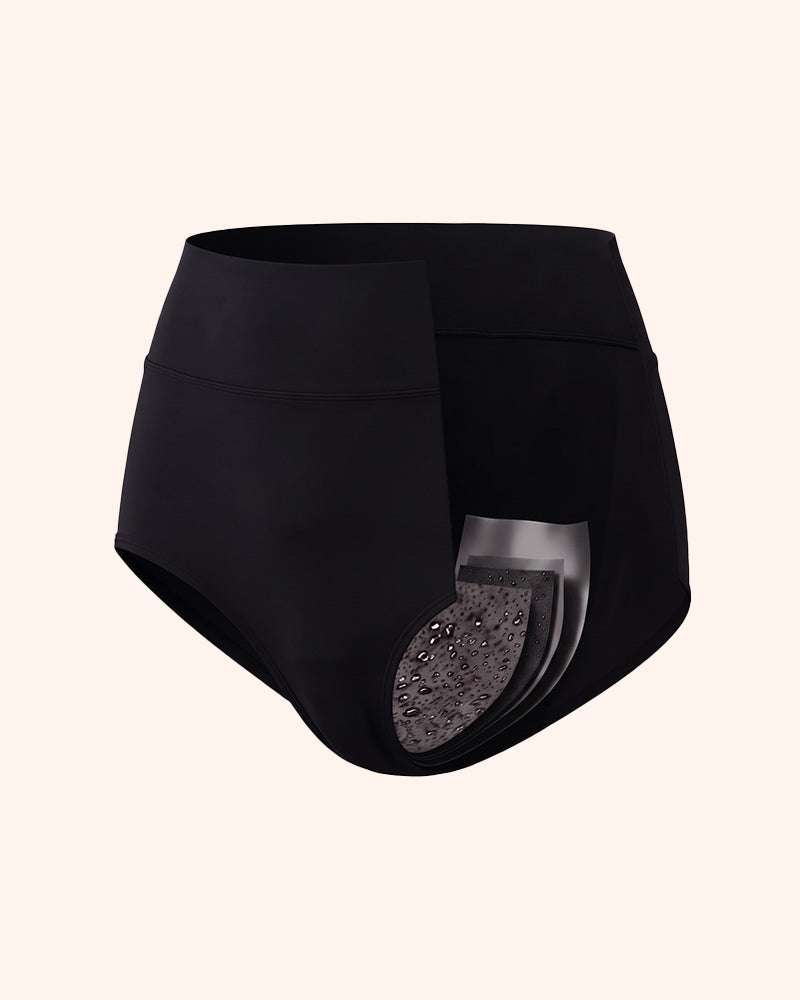
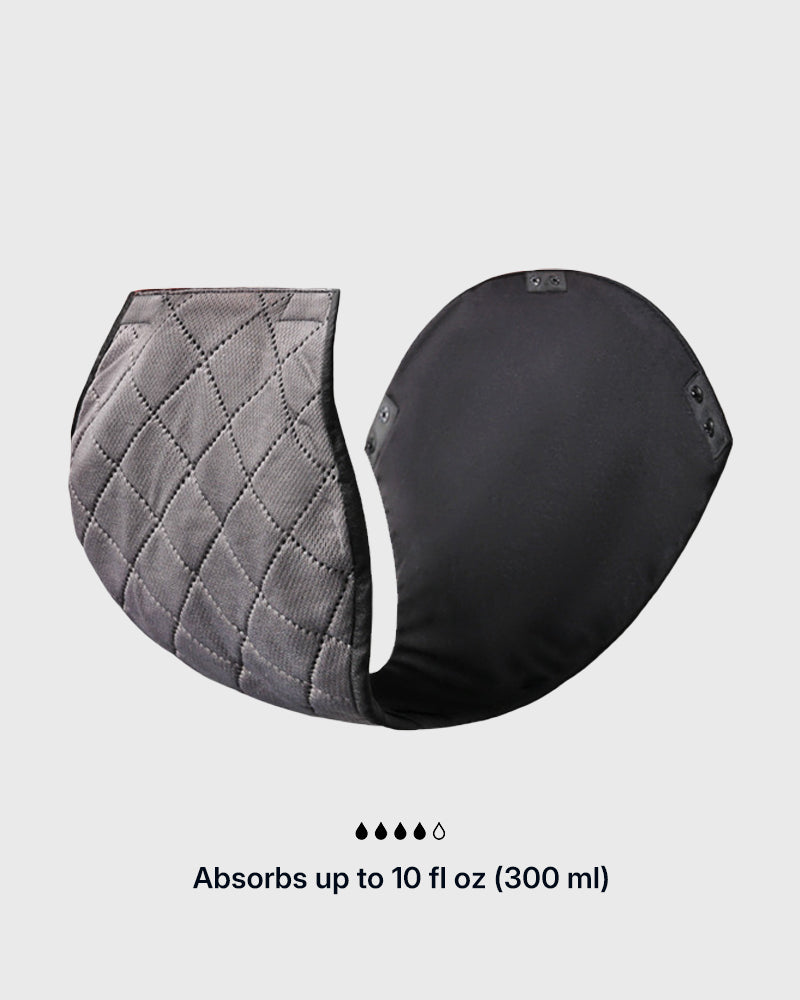
For most funerals, leakproof underwear on its own is enough. It looks and feels like regular underwear under a suit or a dark dress, it doesn't rustle when you stand for a hymn, and there's nothing to shift around when you sit for an hour. The men's leakproof underwear and women's leakproof underwear both come in black, which disappears under funeral clothes. If the day runs long — service, cemetery, wake — a reusable booster pad adds absorbency without changing how anything looks from the outside.

What if you cry — and leak?
It happens. Crying and leaking share the same muscles, and grief doesn't wait for a convenient moment.
If you feel it coming, press your pelvic floor — a quick squeeze, like a Kegel — right before the tears hit. Nobody can see it, and it holds back the small leaks that come with a sob.
Keep a handkerchief or a tissue in your hand, not just in your pocket. You've got something to hold, something to press against your eyes, and a reason to keep your hands busy. And if a leak does happen mid-service, it's a few drops. Your underwear is built for exactly that. Nobody in the room is checking.
The graveside: cold air, standing, and no bathroom in sight
The graveside is the part people forget to plan for. You're outside, you're standing still for 15 or 20 minutes, and the nearest restroom is a drive away. Cold air makes the urge worse — the same reason you need to pee more on a winter walk.
Use the restroom at the funeral home or the church before the cars leave. Don't skip it because the line is long — that line is your last bathroom for a while. If you're driving yourself to the cemetery, give yourself time to stop on the way.
Standing still in the cold is hard on a weak pelvic floor. Shift your weight from foot to foot, keep your knees soft, and stand near the edge of the group, where you can step away without pushing past anyone.
What if you need to leave mid-service?
Go. Funerals are long, and people step out all the time — older relatives with stiff knees, parents with restless kids, someone who needs air. Wait for a hymn or a reading, stand up calmly, and walk at a normal pace. Don't apologize to anyone on your way out.
If changing into a spare pair is the plan, our guide on changing in a public restroom walks through the two-minute version: pouch open, old pair in, new pair on, hands washed, done. And if the service is small and the restroom is right there, you can be back in your seat before the next reading starts.
Afterwards: the wake and the drive home
The wake is easier. There's food, there's a bathroom down the hall, and nobody is watching the clock. Use it. Change if you need to, rinse the used pair in cold water when you get home, and toss it in a mesh laundry bag with the rest of your wash.
The drive home is the last stretch. Don't try to push through a 40-minute drive without stopping — pull into a café, use the restroom, breathe for a minute. You've had a hard day. The bladder stuff was the smallest part of it.
That's really the whole point. You went to say goodbye, not to sit there doing bladder maths. Get the routine right once, and the next hard day is one thing lighter.
Frequently asked questions
Can you wear incontinence underwear to a funeral?
Yes — and it's the simplest option for a long service. It looks and feels like regular underwear, handles the small leaks that crying or standing can trigger, and nobody can tell you're wearing it. For most people, it's the easiest version of how to manage bladder leaks at a funeral.
How do you sit through a long funeral service with bladder leaks?
Empty your bladder right before the service starts, wear protection you trust, and take an aisle seat near the back. Skip the second coffee at the funeral home, and if the urge builds, wait for a hymn and walk out calmly. That's the core of how to manage bladder leaks at a funeral — a little prep, then you stop thinking about it.
What if you leak during the service?
First, breathe. Most leaks are a few drops, and leakproof underwear is built for exactly that. If it's more, wait for a hymn and walk to the restroom at a normal pace. Change into your spare pair, bag the wet one, and come back.
Is it okay to step out during a eulogy?
Yes. People step out of funerals all the time, and nobody keeps a list. Go during a hymn or a reading rather than the middle of the eulogy if you can, but if you can't wait, go. Nobody is judging you for it.
Does crying make bladder leaks worse?
It can. Crying shakes your torso and puts pressure on your bladder, the same way a hard laugh or a cough does. A quick pelvic floor squeeze before the tears hit helps, and our guide on why you leak when you stand up explains the pressure changes in more detail.
Related reading: How to Manage Bladder Leaks at a Wedding · How to Manage Bladder Leaks at a Concert or Sporting Event · How to Manage Bladder Leaks at Church: Sitting Through a Long Service Without the Worry · How to Manage Bladder Leaks on Public Transport

Share:
How to Manage Bladder Leaks at Church: Sitting Through a Long Service Without the Worry
How to Help Your Husband With Incontinence After Prostate Surgery: A Partner's Practical Guide