

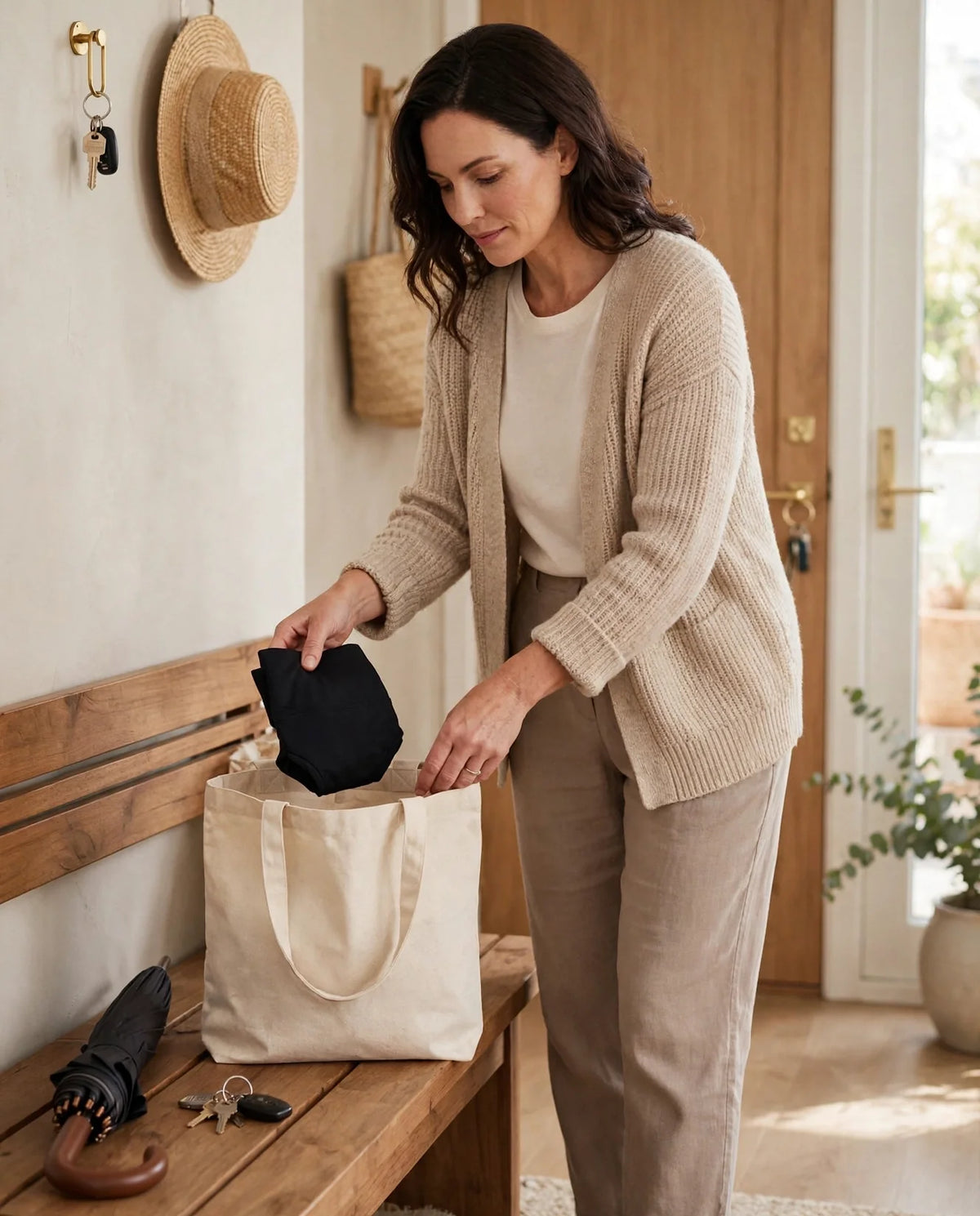
The short answer: If you leak urine when you get home, you are likely experiencing latchkey incontinence — a sudden, intense urge to pee triggered by the routine of arriving home. It is a real, common bladder response, not a personal failing: your brain has learned to associate your front door, your keys, or running water with "bathroom time," and it sends the "go now" signal early. Pausing at the door, urge-suppression techniques, and bladder training can retrain this response — and discreet backup protection removes the anxiety in the meantime.
This article explains why it happens and the practical steps that keep you dry on the way through the door.
Why Do I Leak Urine When I Get Home? Understanding Latchkey Incontinence
Latchkey incontinence is the popular name for a specific pattern: urgency or leaking that strikes as you arrive home — turning the key, stepping inside, or nearing your own bathroom. The term comes from the "latchkey" (your house key): over time, your brain has paired coming home with using the toilet.
This is conditioned behavior. After hundreds of repetitions — arrive, unlock, head to the bathroom — your nervous system starts firing the "time to empty" signal at the cue (the key, the doorstep, the hallway) instead of at the toilet. It is the same mechanism behind why the sound of running water makes people need to pee.
It is not an official diagnosis on its own — it usually sits within urge incontinence or overactive bladder, where strong "empty me" signals are already the norm. People with urge-type symptoms notice the latchkey pattern most.
What Causes This Pattern? The Brain–Bladder Connection
Bladder control is a two-way conversation: as the bladder fills, stretch receptors send "getting full" signals upward, and the brain holds off emptying — keeping the pelvic floor engaged — until you reach a toilet.
Conditioning short-circuits this conversation. When the same cue always precedes the same action, the brain starts anticipating:
- Your brain learns the routine. Arriving home has ended with a bathroom trip hundreds of times, so your brain starts the "emptying program" at the first cue.
- Anticipation becomes urgency. The urge at the door is not about how full your bladder is — it is your nervous system jumping the gun, which is why it can strike even an hour after you last peed.
- Rushing makes it worse. Hurrying, key-jiggling, and fumbling add physical pressure and panic, which intensify the urge.
- Relaxing too early also matters. The moment you feel "almost there," your brain may start relaxing the pelvic floor in preparation — before you are seated.
Your bladder is not broken — a learned response has become automatic, and learned responses can be unlearned.
Common Triggers and Why They Provoke Urgency
The same conditioning shows up in other everyday moments too:
| Trigger | Why it provokes urgency |
|---|---|
| Putting the key in the door | The brain recognizes step one of the routine and starts the emptying program early. |
| Stepping through the front door | The "almost there" feeling makes the brain relax the pelvic floor too soon. |
| Hearing running water | A classic conditioned cue — the sound alone can spark an instant urge. |
| Seeing the toilet | Seeing the toilet makes the brain release its "hold it" effort early. |
| Standing up after sitting | Movement shifts pressure onto the bladder; the urge can spike suddenly. |
| Cold air on the way in | Cold stimulates the bladder for some people — a chilly arrival can double the effect. |
Situational triggers — not just bladder fullness — drive a large share of urgency episodes, research shows.
Is Latchkey Incontinence a Sign of Something Serious?
For most people, this pattern is a nuisance rather than a danger sign. But watch for changes, and talk to a clinician if:
- Leaks are becoming more frequent or heavier over weeks or months
- You feel pain, burning, or discomfort when you pee
- You notice blood in your urine, fever, or new lower-back pain
- The urge wakes you multiple times at night
- You have started avoiding outings, exercise, or social plans because of it
A sudden change can occasionally point to a urinary tract infection, and persistent urgency deserves evaluation. For a fuller list of warning signs, see our guide on when to see a doctor about bladder leaks.
How to Manage Latchkey Incontinence: Practical Strategies
You cannot think your way out of a conditioned reflex — but you can retrain it. These strategies target the exact moment it strikes.
1. Pause at the door instead of rushing
When the urge hits at the doorstep, stop: stand still, breathe slowly, and let the wave peak and fade — it usually passes within a minute. Fidgeting and rushing signal panic and press on the bladder.
2. Use urge-suppression techniques
When the urge surges, try these tricks:
- Quick pelvic floor contractions: Squeeze and lift your pelvic floor firmly for a few seconds, then release — a short set of "freeze and squeeze" contractions quiets the urgency signal. See our beginner's guide.
- Mental distraction: Count backward from 100 by sevens. Occupying the thinking brain weakens the urgency loop.
- Stay upright and still: Avoid bending, crouching, or straining — positions that press on the bladder worsen urgency.
3. Try bladder training
Bladder training gradually stretches the time between bathroom visits — start by delaying each trip by five minutes, and build up slowly. Over several weeks, most people find these episodes become less intense.
4. Empty before you leave, not just when you arrive
Use the bathroom right before you leave work or head out, even if the urge is mild — a less-full bladder gives the trigger less to work with. Just avoid "just in case" peeing every half hour all day; that trains the bladder to signal at smaller volumes.
5. Watch fluid timing in the evening
Do not drink less overall — hydration matters. But shift most fluids earlier in the day and ease off large drinks in the last hour before your commute.
6. Wear discreet backup on the way home

While you retrain the response, remove the fear: reusable leakproof underwear for women and leakproof underwear for men look and feel like regular underwear while absorbing unexpected leaks — so a mistimed urge at the door stays private, not visible. Keep a spare pair in a waterproof carry pouch in your bag, and toss used pairs in a mesh laundry bag for easy washing. Being protected also lowers the anxiety that worsens urgency.
FAQs About Latchkey Incontinence
What is latchkey incontinence?
It is a pattern where a sudden, strong urge — sometimes with leaking — strikes as you arrive home, triggered by the key in the door, stepping inside, or approaching the bathroom. Your brain has learned to associate coming home with emptying your bladder and fires the "go now" signal early. It is most common in people who already experience urgency or overactive bladder symptoms.
Why does running water make me need to pee?
Like the latchkey pattern, it works through association: your brain links the sound of flowing water with urination, so hearing it can prompt an instant urge — even when you are just washing your hands. The same urge-suppression techniques (pelvic floor squeezes, pausing, mental distraction) help you ride it out.
How can I stop leaking urine when I get home?
Combine retraining with backup: pause at the door instead of rushing, use quick pelvic floor contractions and slow breathing to ride out the wave, and practice bladder training to extend the time between trips. Peeing before leaving work helps too, and discreet leakproof underwear removes the fear of an accident.
Can bladder training help with latchkey incontinence?
Yes — it is one of the best tools for this problem. Gradually delaying bathroom trips (starting with five extra minutes) teaches your bladder and brain that the "go now" signal does not have to be obeyed instantly. Many people notice milder at-the-door urgency within a few weeks, especially combined with pelvic floor exercises.
Is latchkey incontinence the same as overactive bladder?
They are closely related. Overactive bladder (OAB) is the broader condition — frequent, sudden urgency signals. Latchkey incontinence is one specific trigger pattern within that picture: urgency tied to arriving home. Treating the underlying urgency (bladder training, pelvic floor work, or medical advice) usually improves the latchkey episodes too.
The Bottom Line
Leaking urine when you get home is not about willpower. It is a learned signal — your brain anticipating the bathroom a few steps too early — and learned signals can be rewritten. Pause at the door, breathe through the wave, build bladder training into your routine, and wear discreet backup in the meantime. In a few weeks, that frantic dash can become a calm walk to the bathroom.
Related reading: Bladder Training: How to Reduce Urgency and Frequent Bathroom Trips · Why Do I Suddenly Have to Pee? Understanding Urgency and Urge Incontinence · Stress vs. Urge Incontinence in Women: How to Understand the Difference



Share:
Do Reusable Incontinence Underwear Smell? How to Keep Them Fresh and Odor-Free
Why Do I Feel the Urge to Pee When I Take a Bath? Warm Water and Bladder Triggers Explained