

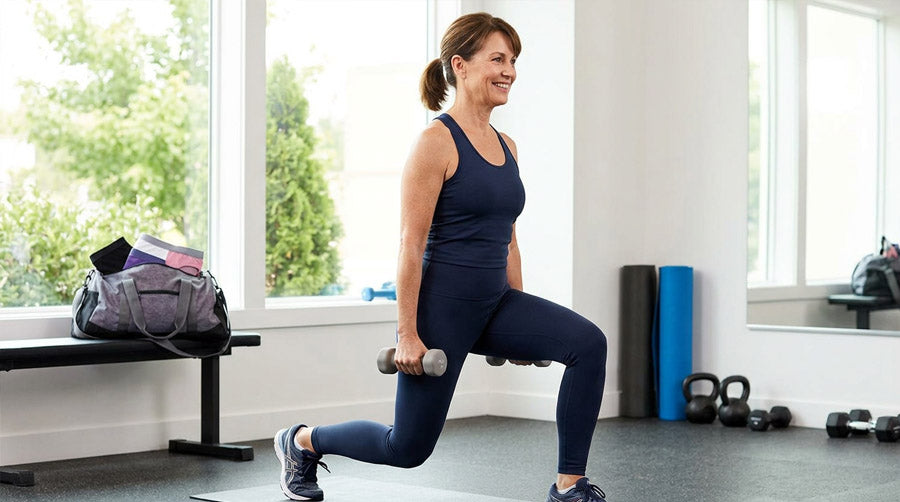
Bladder leaks during exercise can be frustrating, especially when physical activity is an important part of your routine. You may notice a few drops when running, jumping, lifting weights, doing CrossFit, or participating in a high-intensity workout. For some people, leakage can also happen when returning to exercise after childbirth or prostate surgery.
The good news is that experiencing bladder leakage during exercise does not automatically mean you need to give up the activities you enjoy. Understanding when and why leakage happens can help you make practical adjustments, explore pelvic floor training when appropriate, and choose protection that fits your activity level.
If you experience bladder leaks during exercise, start by paying attention to the activities that trigger them. Running and jumping create repeated impact, while heavy lifting and high-intensity movements can increase pressure inside the abdomen. Your individual circumstances matter, so the most useful approach may involve a combination of gradual training, appropriate recovery, pelvic floor support, and practical leak protection.
Why Do I Leak Urine When I Exercise?
Urinary leakage during exercise can happen when the demands placed on the bladder and the muscles involved in bladder control temporarily exceed your ability to maintain continence.
This can be particularly noticeable during activities that involve:
- Running
- Jumping
- Skipping
- Heavy lifting
- Rapid changes in direction
- High-intensity interval training
- Repeated abdominal pressure
For some people, this pattern is associated with stress urinary incontinence, where urine leakage occurs during activities that increase pressure inside the abdomen.
The pelvic floor muscles are one part of the system involved in maintaining bladder control. They need to coordinate with breathing, movement, and changes in pressure during physical activity.
When this coordination is challenged by high-impact or high-intensity exercise, leakage may occur.
Why Do I Leak When I Run or Jump?
Running and jumping place repeated demands on the structures involved in bladder control.
Each step, landing, or change in direction creates movement and pressure that the body needs to manage.
Some people may notice leakage during:
- Long-distance running
- Sprint training
- Treadmill running
- Jump rope
- Box jumps
- Trampoline workouts
- Jumping jacks
You may find that leakage is more noticeable as a workout becomes longer or more intense.
For example, you might be comfortable during the first 10 minutes of a run but notice leakage later in the session. This can provide useful information about your personal activity threshold.
Tracking when leakage occurs may help you identify patterns and decide whether adjusting your exercise intensity or seeking professional guidance would be helpful.
Why Do I Leak During Weightlifting?
Weightlifting and resistance training can increase pressure inside the abdomen, particularly during heavy lifts or movements that require significant effort.
Some people notice leakage during:
- Squats
- Deadlifts
- Barbell lifts
- Heavy kettlebell exercises
- Leg presses
- Overhead lifts
Breathing and bracing strategies may also affect how pressure is managed during a lift.
If leakage occurs during strength training, consider paying attention to which movements and loads trigger symptoms.
Depending on your circumstances, you may be able to modify the weight, repetitions, movement pattern, or training progression while continuing to stay active.
If you are recovering from childbirth, prostate surgery, or another medical procedure, follow your healthcare team's recommendations before returning to heavier lifting.
Bladder Leaks During CrossFit and HIIT Workouts
CrossFit, HIIT, and other high-intensity workouts combine several types of movement that may challenge bladder control.
A single workout might include:
- Running
- Jumping
- Burpees
- Box jumps
- Weightlifting
- Kettlebell swings
- High-repetition movements
Because these workouts can be fast-paced, it may be difficult to identify exactly which movement triggers leakage.
One useful approach is to notice whether leakage is associated with impact, fatigue, heavier loads, or specific movements.
For example, you may notice that:
- Running causes occasional leakage
- Box jumps cause more noticeable leakage
- Heavy squats trigger leakage only at higher loads
- Leakage becomes more likely toward the end of a workout
These patterns can provide useful information when deciding how to adjust your training or discussing symptoms with a qualified professional.
Does Exercise Cause Urinary Incontinence?
Exercise itself does not necessarily cause urinary incontinence.
However, certain types of physical activity can make existing leakage more noticeable because they place greater demands on the muscles and structures involved in bladder control.
This is particularly relevant for high-impact activities and exercises that involve repeated increases in abdominal pressure.
It is also important to distinguish between occasional leakage during specific activities and persistent urinary symptoms.
If leakage occurs regularly, becomes more frequent, or affects your quality of life, consider discussing it with a healthcare professional.
Can I Keep Exercising If I Have Bladder Leaks?
For many people, bladder leakage does not mean that physical activity has to stop completely.
The appropriate level of exercise depends on your individual health, recovery status, symptoms, and any guidance provided by your healthcare team.
You may be able to continue exercising while making temporary adjustments to:
- Workout intensity
- Training volume
- Impact level
- Exercise selection
- Recovery time
For example, someone who experiences leakage during running may temporarily choose lower-impact activities such as walking or cycling while gradually rebuilding their tolerance for higher-impact movement.
Someone who leaks during heavy lifting may experiment with lower loads or different exercise variations, depending on their circumstances and professional guidance.
The goal is not necessarily to avoid movement.
It is to find a level of activity that supports your overall well-being while respecting your body's current needs.
Can Pelvic Floor Exercises Help With Exercise-Related Bladder Leaks?
Pelvic floor muscle training may help some people improve bladder control, particularly when leakage is associated with stress urinary incontinence or pelvic floor muscle function.
The pelvic floor muscles need to coordinate with the rest of the body during movement.
During exercise, this coordination may be challenged by:
- Impact
- Rapid movement
- Increased abdominal pressure
- Muscle fatigue
- Changes in breathing
Pelvic floor training is not simply about making the muscles stronger.
Learning how to contract and relax the muscles appropriately and coordinate them with movement may also be important.
If you are unsure whether you are performing pelvic floor exercises correctly, a qualified pelvic floor physical therapist may be able to provide individualized guidance.
Exercise-Related Bladder Leaks After Childbirth
Some women notice bladder leakage when returning to exercise after pregnancy and childbirth.
This may become apparent when returning to activities such as:
- Running
- Jumping
- High-intensity workouts
- Weightlifting
- Group fitness classes
For some women, leakage may have been present since childbirth but become more noticeable when physical activity increases.
Returning to exercise after childbirth is an individual process.
Your recovery may depend on factors such as your type of delivery, physical recovery, pelvic floor function, and overall health.
If you experience ongoing leakage when returning to exercise, consider discussing your symptoms with a qualified healthcare professional or pelvic floor physical therapist.
Exercise-Related Bladder Leaks After Prostate Surgery
Some men experience urinary leakage when returning to physical activity after prostate surgery.
Leakage may occur during:
- Walking
- Lifting
- Running
- Strength training
- Higher-intensity exercise
The timing of returning to different activities should follow the recommendations provided by your healthcare team.
As activity levels increase, some men may notice that certain movements trigger leakage even if they have good bladder control during everyday activities.
This does not necessarily mean that they cannot return to exercise.
Instead, a gradual progression may allow the body to adapt while you monitor how your symptoms respond.
How Can I Manage Bladder Leaks During Exercise?
Managing bladder leakage during exercise does not have to mean giving up the activities you enjoy. For many people, the most practical approach is to combine appropriate exercise progression, pelvic floor awareness, and protection that matches the amount of leakage.
The right strategy depends on your individual situation, but several practical steps may help make workouts more comfortable and predictable.
1. Identify Your Leakage Triggers
Start by noticing when leakage happens.
Is it during running? Jumping? Heavy lifting? Or does it only happen after you have been exercising for a longer period?
Understanding your personal pattern can help you make more informed decisions about your workouts.
For example, you may discover that:
- Walking does not cause leakage, but running does
- Light strength training feels comfortable, but heavy lifting triggers leaks
- You experience leakage only during jumping exercises
- Leakage becomes more noticeable as you become tired
- You experience occasional drops during high-intensity workouts but not during everyday activities
These patterns can be useful when adjusting your training or discussing your symptoms with a qualified healthcare professional.
2. Progress Gradually
If you are returning to exercise after childbirth, prostate surgery, or another period of reduced activity, gradually increasing your workload may be more manageable than immediately returning to your previous training level.
Depending on your individual circumstances, this may involve gradually increasing:
- Workout duration
- Running distance
- Exercise intensity
- Resistance or weight
- Impact and jumping
A gradual approach can also make it easier to identify which changes in activity are associated with increased leakage.
3. Consider Your Bladder Before a Workout
Some people find it helpful to use the bathroom before exercising, particularly before a long workout or a session where bathroom access may be limited.
However, constantly trying to keep your bladder completely empty is not necessarily practical or appropriate for everyone.
The goal is to develop a routine that works for your body and your activity rather than becoming overly focused on avoiding every possible leak.
4. Stay Hydrated Without Overthinking It
Hydration is an important part of physical activity.
Some people with bladder leakage may be tempted to drastically reduce fluid intake before exercise to avoid leaks.
However, intentionally restricting fluids can create other problems and may not be a sustainable strategy.
Instead, aim to follow sensible hydration habits that fit your activity, environment, and individual needs.
If you have a medical condition or have been given specific fluid recommendations by your healthcare team, follow that guidance.
What Absorbency Is Best for Exercise-Related Bladder Leaks?
The most suitable absorbency depends on the amount and frequency of leakage you experience during exercise.
For some people, a few drops during running or jumping may be manageable with light absorbency underwear.
Others may experience more frequent leakage during longer or higher-intensity workouts and prefer moderate absorbency.
| Exercise Leakage Pattern | Possible Absorbency | Considerations |
|---|---|---|
| Occasional drops during running or jumping | Light | May offer a slim, discreet option for small amounts of leakage |
| Leakage during higher-intensity workouts | Light to moderate | Depends on frequency and amount of leakage |
| More frequent leakage during longer workouts | Moderate | May provide additional moisture management |
| Long training sessions or limited bathroom access | Based on individual needs | Consider duration, leakage amount, and access to changing facilities |
Choosing more absorbency than you actually need may add unnecessary bulk, while choosing too little may leave you worrying about whether your underwear can handle the workout.
The goal is to find a balance between protection, comfort, mobility, and confidence.
What Should You Look for in Workout-Friendly Bladder Leak Underwear?
Not all absorbent underwear is designed with active movement in mind.
If you plan to wear reusable bladder leak underwear while exercising, several features may be worth considering.
Secure Fit
A secure fit can help the absorbent area stay in the correct position while you move.
This can be particularly important during activities that involve running, jumping, squatting, or frequent changes in direction.
Underwear that shifts during exercise can become distracting and uncomfortable, even when the absorbency itself is adequate.
Flexible Construction
Workout clothing needs to move with your body.
Flexible materials and a comfortable cut can make it easier to move naturally during activities such as squats, lunges, running, or stretching.
Low-Profile Design
Many people prefer protective underwear that does not look or feel noticeably different from regular underwear.
A low-profile design can be especially useful under leggings, shorts, joggers, or fitted athletic clothing.
The less you have to think about what you are wearing, the more attention you can give to the activity itself.
Breathable Materials
Exercise naturally creates heat and perspiration.
Breathable fabrics may help improve comfort during longer workouts by allowing better airflow and moisture management.
This is particularly relevant if you plan to wear reusable leak protection for extended periods before or after exercise.
Quiet Materials
Noise may not be the first thing people consider when choosing protective underwear, but it can matter.
Some people feel self-conscious about the sound or texture associated with traditional protective products.
For those who prefer a more discreet experience, soft fabric construction and low-noise materials may help underwear feel more like ordinary athletic underwear.
Why Comfort Matters When Exercising With Bladder Leakage
When you are already thinking about whether you might leak, uncomfortable underwear can make the experience even more distracting.
You may find yourself wondering:
- Is the absorbent area in the right place?
- Will the underwear move when I run?
- Will it show through my clothing?
- Will it feel hot during my workout?
- Will anyone notice?
These concerns are understandable.
For some people, choosing comfortable and discreet protection can reduce the amount of mental attention spent on leakage during exercise.
The goal is not to pretend that leakage does not happen.
It is to make it less disruptive to your day.
Can Bladder Leak Underwear Help You Stay Active?
Absorbent underwear does not address the underlying cause of urinary leakage, but it can help manage the practical side of leakage while you remain active.
For someone who occasionally leaks during running, for example, wearing suitable protection may make it easier to continue a workout without constantly worrying about a small accident.
For someone returning to exercise after childbirth or prostate surgery, protective underwear may provide an additional layer of confidence while following an appropriate recovery plan.
This can be particularly useful during activities where access to a bathroom or changing area is limited.
Reusable underwear may also appeal to people who prefer a washable option that can become part of their normal workout routine.
How to Stay Active Without Constantly Worrying About Leaks
Bladder leakage can sometimes create a cycle of worry.
You may become concerned about leaking, which makes you more aware of every sensation, which can make exercise feel less enjoyable.
A few practical habits may help reduce that mental burden.
- Know your common leakage triggers
- Choose absorbency based on your actual needs
- Wear comfortable, secure underwear
- Carry a spare pair when appropriate
- Know where bathrooms are available
- Progress exercise gradually when returning from recovery
- Follow professional guidance when symptoms require assessment
Preparation is not a sign that you are fragile.
It is simply a practical way to give yourself more freedom to focus on what you actually want to do.
When Should You Modify Your Workout?
Occasional leakage during a specific activity may not mean that you need to stop exercising entirely.
However, you may want to consider modifying your workout if leakage is becoming more frequent, more substantial, or increasingly disruptive.
Depending on your circumstances, modifications might include:
- Reducing exercise intensity temporarily
- Reducing impact
- Using lower weights
- Taking longer recovery periods
- Replacing some high-impact exercises with lower-impact alternatives
- Gradually rebuilding your previous training volume
The appropriate approach depends on your health and recovery status.
If you are returning to exercise after surgery or childbirth, follow the activity recommendations provided by your healthcare team.
When Should You Seek Professional Guidance?
Bladder leakage during exercise is common enough to be discussed openly, but persistent or concerning symptoms should not be ignored.
Consider speaking with a qualified healthcare professional if:
- Leakage is becoming more frequent
- You experience significant or unexpected urine loss
- You have pelvic pain
- You have difficulty emptying your bladder
- You notice blood in your urine
- You experience pain or burning when urinating
- You have sudden changes in bladder control
- Leakage is significantly limiting your daily life or exercise
A healthcare professional can help determine whether your symptoms need further assessment and whether pelvic floor physical therapy or another approach may be appropriate.
Health Information Note
This article provides general educational information about bladder leakage during exercise and practical ways to manage it. It is not intended to diagnose, treat, or replace personalized medical advice.
If you experience persistent, worsening, painful, or unexplained urinary leakage, consider discussing your symptoms with a qualified healthcare professional. If you are recovering from childbirth, prostate surgery, or another medical procedure, follow the exercise and recovery guidance provided by your healthcare team.
Share:
Pelvic Floor Exercises for Bladder Leaks: What They Can and Can't Do
How to Choose Reusable Bladder Leak Underwear: A Practical Buyer's Guide