

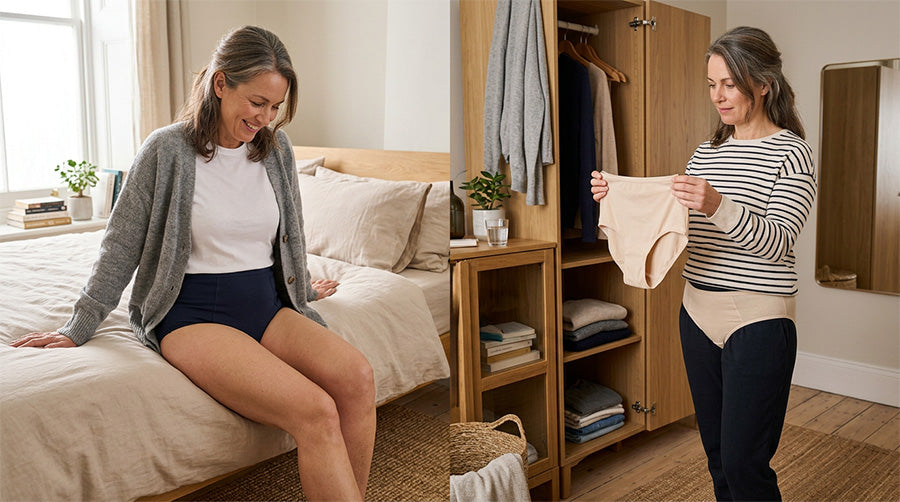
Bladder leaks can become more noticeable during perimenopause and menopause. You may suddenly find yourself rushing to the bathroom, leaking when you cough or exercise, waking up more often at night, or feeling less confident about getting through the day without an accident.
These changes can be related to several factors, including pelvic floor changes, aging, changes around menopause, bladder sensitivity, and other health conditions. Menopause does not mean you simply have to accept bladder leakage as part of getting older.
Can Menopause Cause Bladder Leaks?
Menopause and the years leading up to it can be associated with changes in bladder control. Women are more likely to experience urinary incontinence during and after pregnancy, childbirth, and menopause.
However, menopause is not the only possible explanation for new bladder symptoms. Urinary tract infections, constipation, medications, diabetes, pelvic floor problems, and other conditions can also contribute to urinary symptoms.
That is why a new or changing bladder problem should not automatically be blamed on menopause.
What Bladder Symptoms Can Happen During Perimenopause?
Bladder symptoms can vary from person to person. Common patterns include:
- Stress leakage: urine leaks when coughing, sneezing, laughing, lifting, running, or exercising.
- Urgency: a sudden, difficult-to-delay need to urinate.
- Urge incontinence: urine leaks before you can reach the bathroom after a strong urge.
- Frequency: needing to urinate more often than usual.
- Nighttime urination: waking up during the night to use the bathroom.
- Mixed incontinence: experiencing both stress and urgency-related leakage.
These patterns can overlap, so paying attention to when leakage occurs can be more useful than focusing only on how often it happens.
Why Does Leakage Become More Noticeable Around Menopause?
There is not always one single cause.
Changes associated with menopause may occur alongside changes in pelvic floor muscle function, bladder habits, body weight, physical activity, constipation, and other age-related health factors.
Some women also develop urinary symptoms together with other genitourinary changes associated with menopause, such as vaginal dryness, discomfort, or burning with urination.
If urinary symptoms are new, persistent, or changing, it is worth considering more than one possible contributor.
Is It Stress Incontinence or Urge Incontinence?
Knowing the pattern can help you understand what is happening.
| Stress leakage | Urgency leakage |
|---|---|
| Leak with coughing, sneezing, laughing, lifting, or exercise. | Strong urge comes suddenly and is difficult to postpone. |
| Often linked to physical pressure on the bladder. | Often linked to urgency or bladder-storage symptoms. |
| May happen during running, jumping, or changing position. | May happen before reaching the bathroom. |
Some people have both patterns. This is called mixed urinary incontinence.
Can Pelvic Floor Exercises Help?
Pelvic floor muscle training can improve bladder control for many women. These muscles help support the bladder and contribute to keeping urine from leaking.
A basic pelvic floor exercise involves gently tightening the muscles used to control urine flow, holding briefly, and then fully relaxing them.
Regular practice is generally more useful than doing a very large number of contractions occasionally. If you are unsure whether you are using the right muscles, a pelvic floor physical therapist can provide individualized guidance.
Pelvic floor exercises should not be performed while urinating.
What About Urgency and Frequent Bathroom Trips?
If your main problem is a sudden urge to urinate, strengthening the pelvic floor is only one part of the picture.
Bladder training may help some people gradually increase the time between bathroom visits. Urge-suppression techniques can also be useful. When a strong urge appears, you can try stopping for a moment, breathing slowly, staying still, and using several quick pelvic floor contractions if you have been taught the technique correctly.
A bladder diary can also help reveal patterns. For two or three days, record what and when you drink, when you urinate, how often leakage occurs, whether you felt urgency first, and what you were doing when the leak happened.
Should You Drink Less Water?
Usually, severely restricting fluids is not a good strategy for managing bladder leakage.
Too little fluid can contribute to dehydration, while individual drinking patterns can affect how often you need to urinate.
Instead of simply drinking as little as possible, pay attention to your overall fluid intake and whether specific drinks make your symptoms worse.
Caffeine and alcohol can increase urinary symptoms for some people. If you notice a consistent connection, reducing those triggers may help.
What About Weight and Constipation?
Bladder symptoms can be affected by factors beyond the bladder itself.
Being overweight or having obesity is associated with a higher likelihood of urinary incontinence, and weight loss can reduce leakage for some women. Constipation can also contribute to bladder problems.
This does not mean that bladder leakage is simply a weight problem. It means that addressing several contributing factors at the same time may be more useful than focusing on a single cause.
What Can Help With Everyday Bladder Leaks?
While you are working on the underlying problem, practical protection can make daily life easier.
- Choose absorbency appropriate for the amount of leakage you experience.
- Keep a spare pair of underwear available when you expect a longer day away from home.
- Consider protection during exercise if movement triggers leakage.
- Use a laundry bag when washing reusable absorbent underwear.
- Track symptoms so you can recognize whether leakage is improving or changing.
Absorbent washable underwear is one option for managing occasional urine leaks. It can be used as part of a broader bladder-management routine rather than as a substitute for evaluating persistent symptoms.
What If I Also Have Vaginal Dryness or Pain?
Urinary symptoms can occur alongside other genitourinary symptoms during perimenopause and menopause.
If you have vaginal dryness, burning, pain with sex, recurrent urinary symptoms, or other changes that are affecting your quality of life, discuss them with a healthcare professional. Treatment options depend on your symptoms, medical history, and individual circumstances.
You do not have to assume that discomfort or bladder changes are simply something you have to live with.
When Should You Get Your Bladder Symptoms Checked?
It is worth talking with a healthcare professional if bladder leakage is persistent, worsening, or interfering with exercise, sleep, work, travel, or intimacy.
You should also seek medical advice if you have:
- New urinary leakage that does not have an obvious explanation.
- Pain or burning when urinating.
- Blood in your urine.
- Difficulty starting urination or emptying your bladder.
- Persistent pelvic pain or pressure.
- A feeling of vaginal heaviness or bulging.
- Frequent or urgent urination that is new or getting worse.
Some bladder symptoms can be caused by conditions other than menopause, so persistent or unusual symptoms deserve proper evaluation.
A Simple Menopause Bladder-Health Plan
- Identify the pattern: Notice whether leakage happens with pressure, exercise, urgency, or a combination.
- Track symptoms: Keep a short bladder diary if the pattern is unclear.
- Train the pelvic floor: Practice consistently and focus on correct technique.
- Work on urgency: Consider bladder training and urge-suppression strategies when appropriate.
- Review triggers: Pay attention to caffeine, alcohol, constipation, and drinking patterns.
- Stay active: Modify exercise when needed rather than automatically giving up activities you enjoy.
- Use practical protection: Absorbent underwear or other products can provide additional confidence while you work on bladder control.
- Get persistent symptoms checked: Do not automatically assume every new bladder symptom is caused by menopause.
The Bottom Line
Bladder leaks can become more noticeable during perimenopause and menopause, but there is rarely one explanation that applies to everyone.
Stress incontinence, urgency, pelvic floor changes, lifestyle factors, constipation, and other health conditions can all play a role. Understanding your particular leakage pattern is the first step toward finding useful strategies.
Menopause may be part of the picture, but bladder leakage does not have to define this stage of life.
This article is for general educational purposes and is not a diagnosis or a substitute for individualized medical advice.
FAQ: Bladder Leaks During Perimenopause and Menopause
Can menopause cause urinary incontinence?
Urinary incontinence is more common in women during and after menopause, but menopause is not necessarily the only cause. Pelvic floor changes, aging, constipation, medications, infections, and other health conditions can also contribute.
Why am I suddenly leaking urine in my 40s or 50s?
Perimenopause or menopause may be one factor, but new leakage can have several possible causes. The pattern of leakage, other urinary symptoms, medications, pelvic floor function, and overall health can all be relevant.
Why do I suddenly have to pee during menopause?
Urinary urgency and increased frequency can occur around menopause. Caffeine, alcohol, bladder habits, constipation, urinary infections, and other factors can also contribute, so persistent symptoms should not automatically be attributed to menopause.
Can pelvic floor exercises help menopause bladder leaks?
Pelvic floor muscle training can improve bladder control for many women. Correct technique and consistent practice are important, and individualized pelvic floor therapy may be useful when symptoms are difficult to manage.
Should I stop drinking water if I have bladder leaks?
No. Severe fluid restriction can lead to dehydration. It is usually more useful to maintain appropriate hydration while paying attention to drinking patterns and beverages that may trigger symptoms.
Can caffeine make menopause bladder symptoms worse?
Caffeine can increase urinary symptoms for some people. If you notice more urgency or leakage after coffee, tea, chocolate, or other caffeinated products, reducing your intake may be worth trying.
Can constipation cause bladder leaks?
Constipation can contribute to bladder-control problems. Addressing constipation through appropriate fluid intake, dietary fiber, physical activity, and professional guidance when needed may help.
Can menopause bladder leaks be treated?
Management depends on the type and cause of the leakage. Options can include lifestyle changes, pelvic floor muscle training, bladder training, medications, devices, or other treatments recommended by a healthcare professional.
Should I wear absorbent underwear for menopause bladder leaks?
Absorbent underwear can be a practical way to manage occasional leakage and reduce worry about accidents. It can be used alongside, rather than instead of, appropriate evaluation and bladder-management strategies.
When should I see a doctor about menopause-related bladder leaks?
Consider professional evaluation if leakage is persistent, worsening, or interfering with daily life. Painful urination, blood in the urine, difficulty emptying the bladder, persistent pelvic pain, or new significant urinary symptoms also deserve medical attention.
Related Reading
- Why Do I Suddenly Have to Pee? Understanding Urgency and Urge Incontinence
- Bladder Leaks During Exercise: Why You Leak When Running, Jumping, or Working Out
- How to Wash and Care for Reusable Bladder Leak Underwear
Looking for discreet, reusable protection? Explore Rooces women's washable incontinence underwear designed for everyday confidence. Pair them with a mesh laundry bag to protect the absorbent layers in the wash.



Share:
Bladder Leaks During Sex: Why It Happens and What Can Help
Why Do I Leak Urine While Sleeping? Causes and What Can Help