

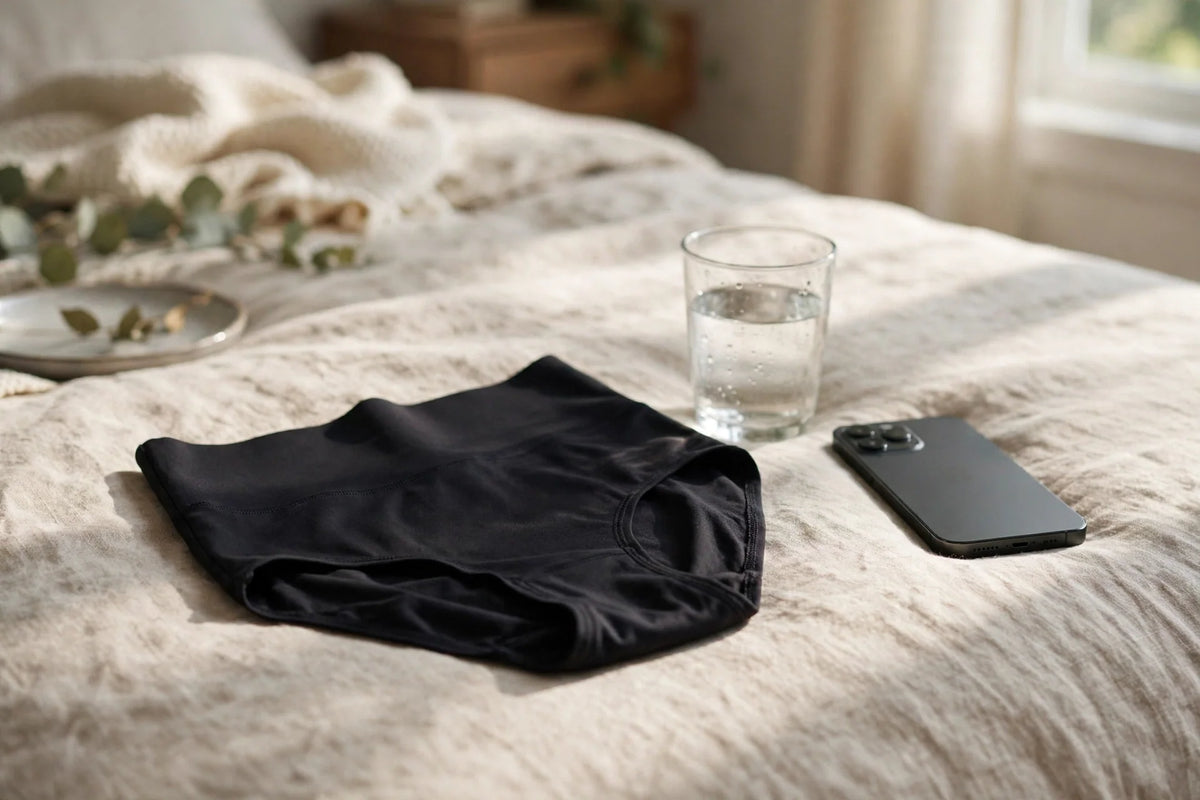
The short answer: holding your pee once in a while won't wreck your bladder, but making a habit of it can leave you leaking more often. Can holding your pee cause bladder leaks? Yes — in a roundabout way. An overfull bladder gets worse at sending clear signals, and a tired pelvic floor gets worse at holding back.

You know the scene. You're in the checkout line, the urge hits, and you tell yourself you'll go when you get home. Then it's a 40-minute drive and one more errand. By the time you reach your front door, keys already in hand, a little leaks out before you make it.
Can holding your pee cause bladder leaks?
Short version: yes, mostly through knock-on effects rather than one single incident. Hold it for hours, day after day, and three things start to shift.
First, the bladder stretches. It's a muscle, and like any muscle it gets less responsive when it's constantly overfilled. The "I'm full" signal turns fuzzy. You might feel less urge until you're suddenly desperate — or feel an urge that doesn't match how full you actually are.
Second, the pelvic floor tires. Those muscles hold everything closed while you wait. Ask them to grip hard for an extra hour, every day, and they fatigue the same way your arms would if you carried groceries all afternoon. A tired pelvic floor lets small amounts slip, usually when you laugh, cough, or finally stand up to go.
Third, the habit trains the wrong pattern. Your bladder learns that "full" means "wait longer." Over time the gap between first urge and can't-hold-it-anymore gets shorter, not longer. That's the opposite of what most people want.
What actually happens inside when you hold it?
Your bladder fills steadily from the kidneys, and stretch receptors in its wall tell your brain how full it is. At a comfortable level, you notice a mild urge. You can ignore that for a bit — that's normal. Push past the strong urge, though, and pressure builds. The sphincter muscles work harder to stay shut.
Most healthy adults can hold a full bladder for a short stretch without harm. Trouble starts when "a short stretch" becomes the default: the two-hour meeting with no break, the shift where the bathroom is a ten-minute walk away, the road trip where you keep saying "next exit" four exits in a row.
Is it different if you only do it sometimes?
Very different. Context matters more than any single incident.
| Pattern | What usually happens | What to watch for |
|---|---|---|
| Once in a while | You feel desperate, you go, life goes on | Nothing, unless it hurts or you can't empty fully |
| A few times a week | Urges may feel sharper and harder to predict | Leaks on the way to the bathroom, especially when you get home |
| Daily, for hours at a time | Signals get fuzzy, pelvic floor tires, emptying gets incomplete | More frequent leaks, night-time trips, recurring irritation |
If you fall in the first row, relax. If the third row sounds familiar, the fix is usually boring and practical — which is good news, because boring fixes are the ones people actually stick with.
Who tends to notice it first?
Anyone whose job or life makes bathroom breaks hard. Teachers between classes. Nurses on long shifts. Drivers on routes with no stops. New parents who put everyone else first and realize at 3 p.m. they haven't gone since breakfast.
Some bodies notice it sooner. After childbirth, the pelvic floor is still recovering, so an overfull bladder overwhelms it faster. After prostate surgery, men often deal with urgency that's already touchy. During perimenopause and menopause, lower estrogen can thin the tissues around the urethra, so the margin for error shrinks. None of that means holding it caused the underlying condition — it means the habit can make an existing weak spot show up sooner.
Wait — isn't holding it a way to train your bladder?
This is where people get mixed up, and it's worth untangling. Bladder training does involve delaying urination — but on a schedule, by minutes, with a plan, and never by ignoring a screaming urge for hours. You stretch the gap between trips gradually, from, say, every hour to every two hours, while your bladder relearns a normal rhythm.
That's the opposite of white-knuckling it through a whole afternoon because the bathroom is inconvenient. One is training. The other is overloading. If you're not sure which one you're doing, ask yourself: could I have gone an hour ago and just didn't? If yes, that's not training.
Most adults naturally go about every three to four hours during the day. If you want a sense of what's typical, read how often you should pee — and notice how "just in case" trips every 30 minutes can cause their own problems, too. The goal is a middle ground, not a record.
What to do when you can't get to a bathroom
Sometimes you genuinely can't go. A traffic jam doesn't care about your bladder. A few tricks buy you time without turning into a habit:
Stop rushing. Hurrying to the bathroom — that fast walk, the fumbling with keys — often triggers the leak you're trying to avoid. Slow down. Stand still for a few seconds if you need to.
Shift your attention. Count backwards from 100, name five things you can see, press your toes into your shoes. It sounds silly. It works because urgency spikes when your brain fixates on it.
Sit if you can. Standing with a full bladder puts more pressure on the pelvic floor than sitting does. If you're at home and the bathroom is occupied, sit down and wait rather than dancing in the hallway.
Plan the next trip, not just this one. If your day regularly leaves you stranded, that's a planning problem, not a willpower problem. A spare pair and a waterproof pouch tucked in your bag means a leak on the way stops being a crisis. (Our guide to stopping urge leaks when you can't reach a bathroom in time goes deeper on these tactics.)
When to get it checked
Most holding-related leaks settle once the habit stops. Get checked sooner if you notice pain or burning when you pee, blood in your urine, fever, a feeling that you can't empty fully, or leaks that suddenly get much worse. Those can point to an infection or something else that needs treatment, not just a habit tweak. Our guide on when to see a doctor about bladder leaks lists the warning signs in plain language.
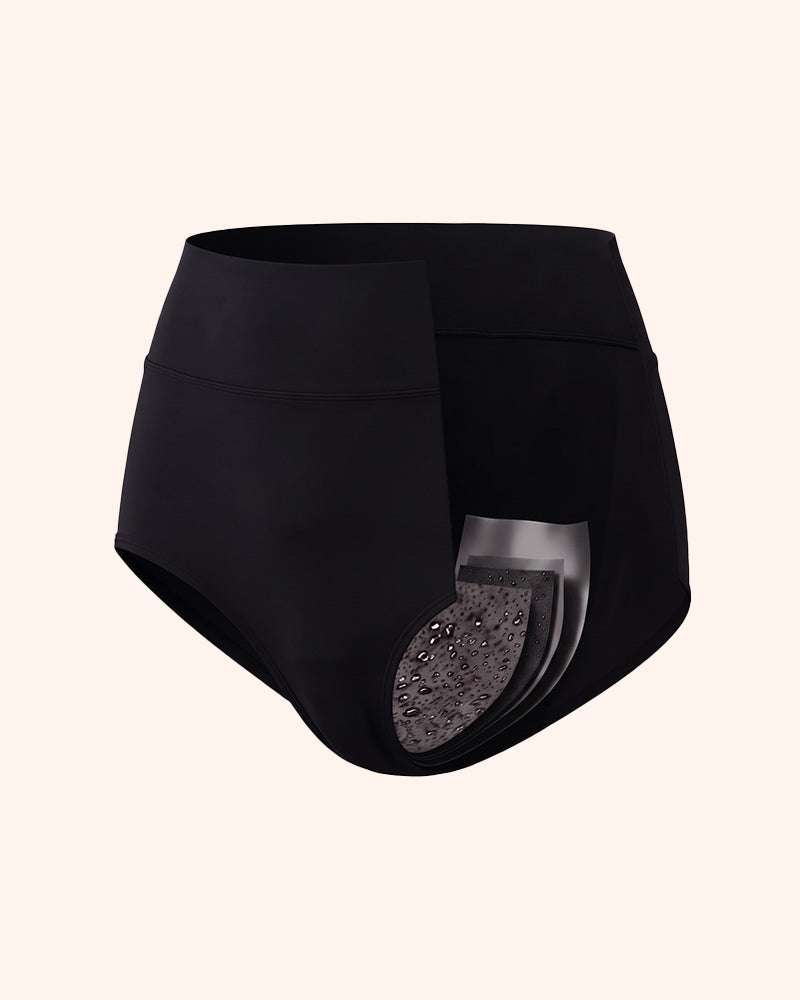
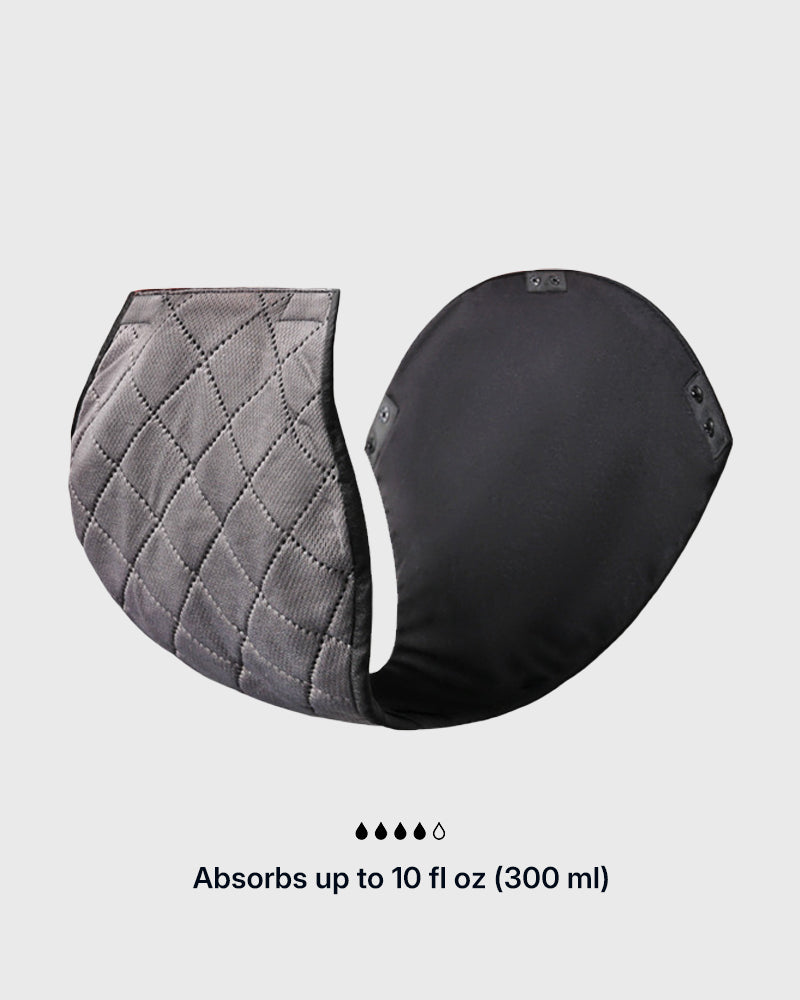
And if leaks keep happening even after you've fixed the holding habit, backup protection takes the stress out of the retraining period. Women's Stay Discreet washable underwear and men's Stay Discreet washable underwear look and feel like regular underwear, so a small slip on the way to the bathroom doesn't derail your day. A laundry bag keeps them easy to wash with everything else.
Frequently asked questions
Can holding your pee cause bladder leaks permanently?
Not usually on its own. Most of the effect reverses once you stop holding it for hours every day. Leaks that stick around usually have another cause, and the holding habit was just making it louder.
How long can you hold your pee safely?
There's no single number that fits everyone. A couple of hours past the first mild urge is fine for most healthy adults; routinely pushing four or more hours past a strong urge is where problems tend to show up. If it hurts, or you regularly can't empty fully afterwards, that's your bladder asking you to stop sooner.
Can holding your pee cause a UTI?
It can raise the odds a bit. Urine sitting in the bladder longer gives bacteria more time to multiply, and incomplete emptying leaves some behind. Holding it once won't give you an infection, but a daily habit plus burning or cloudy urine is worth getting checked.
Does holding your pee weaken your pelvic floor?
Think of it less as weakening and more as wearing out. The muscles fatigue from gripping too long, the same way your hand cramps after holding a bag too long. Rest, normal bathroom timing, and pelvic floor exercises usually restore them.
Can holding your pee cause bladder leaks in men too?
Yes, and men sometimes notice it differently — more dribbling after peeing, or a sudden urge that arrives with almost no warning. After prostate surgery the margin is thinner, so the same habit that a younger man shrugs off can tip an older man into regular leaks. The fix is the same: stop the marathon holds, and get checked if leaks persist.
Next time the urge hits in the checkout line, don't make it a test of willpower. Go when you reasonably can, keep the gaps between trips somewhere near normal, and let your bladder do the quiet job it was built for.

Share:
What Tests Will a Doctor Do for Bladder Leaks? A Plain-English Guide to Your First Workup
How Long Do Postpartum Bladder Leaks Last? A Realistic Recovery Timeline