

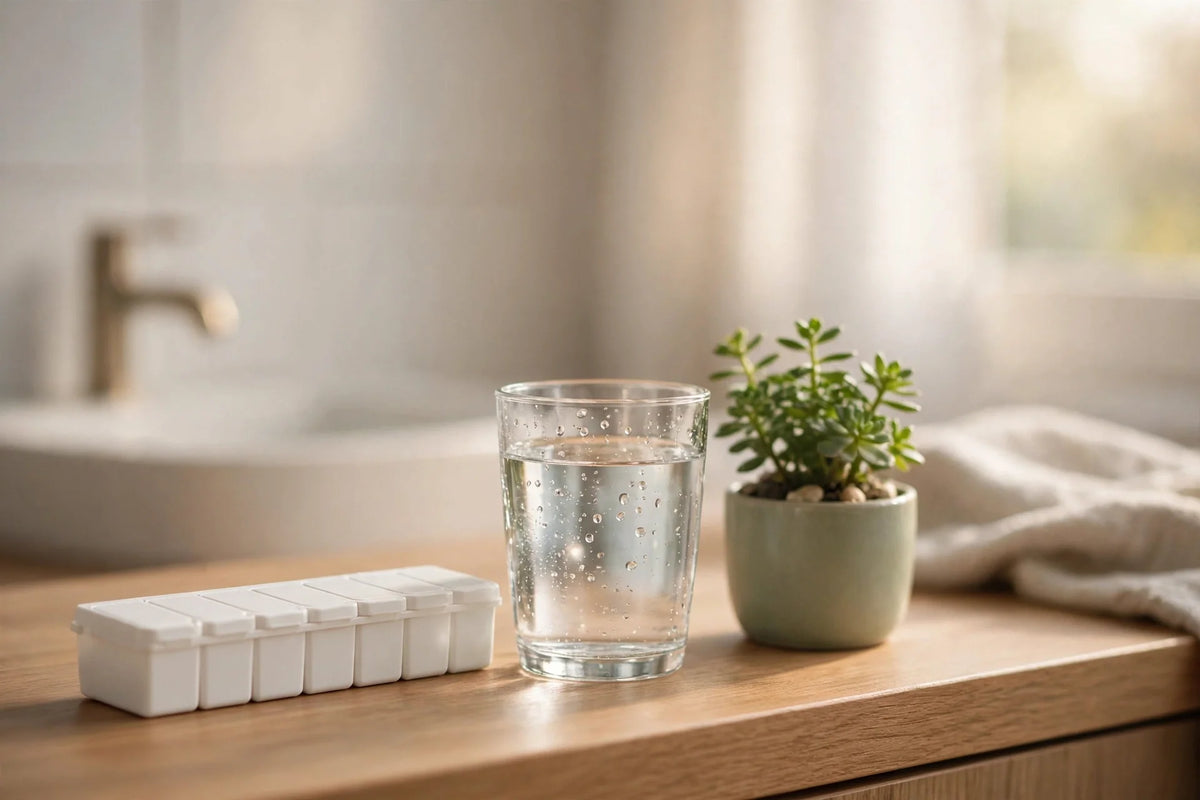
The short answer: Yes—several common prescription and over-the-counter drugs can make bladder leaks more likely, more frequent, or harder to control. Diuretics increase urine output, sedatives dull the bladder's signals, and drugs that dry out the body or weaken the bladder muscle can all play a role. If your leaks started or got worse after beginning a new medication, talk to your doctor before changing anything—dose timing or an alternative often fixes the problem without stopping treatment.

You started a new prescription, and suddenly you're rushing to the bathroom more often—or noticing small leaks you never had before. It is not your imagination, and it is not "just aging." A surprising number of everyday medications affect how your bladder stores and releases urine. In fact, drug-induced bladder symptoms are one of the most common—and most overlooked—causes of new or worsening incontinence, especially in adults over 50 who take several medications at once.
This guide explains which types of drugs are the usual suspects, how they interfere with bladder control, and what you can actually do about it. Managing leaks while you get answers matters too—whether the medication changes or stays, everyday protection like washable high-waisted leakproof underwear for women or discreet washable underwear for men can keep you comfortable and confident in the meantime.
How Medications Can Affect Bladder Control
Normal bladder control is a team effort. Your bladder muscle (the detrusor) has to stay relaxed while the bladder fills, the sphincter muscles around the urethra have to stay closed, and your brain has to register the "full" signal in time for you to reach a bathroom. Medications can disrupt this system in a few distinct ways:
- Increasing urine production. More urine, faster filling, less time between bathroom trips—and more pressure on the bladder.
- Weakening or over-relaxing the bladder muscle. If the detrusor cannot contract strongly, the bladder may not empty fully, leading to dribbling and overflow-type leaks (see our guide on overflow incontinence).
- Overstimulating the bladder. Some drugs irritate the bladder lining or make the detrusor twitchy, causing sudden, strong urges—the hallmark of urge incontinence. Our article on urgency and urge incontinence explains how that feels.
- Dulling awareness or mobility. Sedatives can make you sleep through the "full" signal at night or slow you down enough that you cannot reach the bathroom in time.
- Drying out the body. Dehydration concentrates urine, which irritates the bladder and can worsen urgency—as covered in our guide on dehydration and bladder leaks.
Which Drugs Are the Usual Suspects?
The table below lists the drug classes most commonly linked to bladder problems. Keep in mind that not everyone who takes them will notice symptoms—dose, age, and other health conditions all matter.
| Drug type | Examples of what it treats | How it can affect the bladder | What to ask your doctor |
|---|---|---|---|
| Diuretics ("water pills") | High blood pressure, heart failure, swelling | Dramatically increase urine volume, causing frequent trips and urgency—especially in the hours after the dose | Can the dose be taken earlier in the day, or is a different blood-pressure option suitable? |
| Sedatives and sleep aids | Insomnia, anxiety | Dull the brain's awareness of a full bladder and slow reaction time, increasing nighttime leaks | Is the dose appropriate, or could sleep-hygiene steps reduce the need for it? |
| Anticholinergic drugs | Allergies (older antihistamines), motion sickness, some bladder drugs | Can cause incomplete emptying and constipation, both of which worsen leaks | Is there a newer alternative with fewer bladder side effects? |
| Alpha-blockers | Enlarged prostate, high blood pressure | Relax the urethral sphincter; in some people this eases flow, in others it allows leaks | Is the leak pattern new since starting it? |
| ACE inhibitors | High blood pressure, heart failure | A persistent dry cough is a known side effect—and repeated coughing can trigger stress leaks | Would switching blood-pressure classes stop the cough? |
| Opioid pain medications | Chronic or post-surgical pain | Often cause constipation, which presses on the bladder and worsens urgency and leaking | Can bowel management be added to the plan? |
| Calcium-channel blockers | High blood pressure, angina | Can reduce bladder muscle strength in some people, making it harder to empty fully | Is the incomplete-emptying feeling new? |
| Decongestants (pseudoephedrine) | Colds and congestion (OTC) | Tighten the bladder outlet—sometimes helpful for stress leaks, but can cause difficulty urinating or retention in others | How long is it safe to use for your situation? |
This is not an exhaustive list. Certain antidepressants, antipsychotics, and muscle relaxants can also affect bladder function in some people. Over-the-counter products count too—caffeine-containing painkillers and energy drinks are double offenders, since caffeine itself irritates the bladder.
How to Tell If a Medication Is Behind Your Leaks
Bladder changes caused by drugs have a few telltale patterns. Ask yourself:
- Timing. Did the leaks start, or get noticeably worse, within days or weeks of starting a new drug or raising a dose?
- Dose pattern. Are symptoms worst in the hours right after you take the pill, then ease off? (Classic for diuretics.)
- New combinations. Did the problem appear after a second drug was added, even if each drug alone was fine?
- Reversibility. Did a similar problem disappear when you previously paused the drug (for example, before a procedure)?
A simple bladder-and-medication diary for one to two weeks—note times of doses, fluids, bathroom trips, and leaks—gives your doctor exactly the evidence needed to connect the dots.
What You Can Do (Without Risking Your Treatment)
The single most important rule: never stop or skip a prescribed medication on your own to test whether the leaks stop. Blood-pressure drugs, heart medications, and many others can cause rebound effects or serious harm if stopped abruptly. Instead:
- Talk to the prescriber. Bring your diary and ask directly: "Could this drug be contributing to my bladder leaks, and are there alternatives?" Doctors adjust prescriptions for bladder side effects routinely—it is a common, legitimate reason for a medication review.
- Ask about timing. For diuretics, taking the dose in the morning instead of the evening often solves nighttime bathroom trips and leaks. Your doctor may also split doses or switch to a shorter-acting option.
- Review everything, including OTC products. Cold medicines, antihistamines, and even some supplements can add up. A pharmacist can run a full interaction check in minutes—often without an appointment.
- Address the add-on factors. Treat constipation, cut back on bladder irritants like caffeine and alcohol (see how alcohol affects bladder control), and stay sensibly hydrated rather than restricting fluids.
- Get checked when warning signs appear. Blood in urine, burning when you pee, fever, new back pain, or a sudden inability to urinate are not "medication side effects" to wait out—see when to see a doctor about bladder leaks and get prompt care.
Staying Comfortable While You Sort It Out
Medication reviews take time, and sometimes the drug that causes leaks is the one you need most. That is a perfectly fine outcome—as long as you have a plan for the leaks. Washable leakproof underwear handles exactly this gap: built-in absorbency for light-to-moderate leaks, no bulky pads to change, and a normal-underwear look under clothes. For heavier days or added security, a reusable high-absorbency booster pad slips into compatible styles, and a waterproof carry pouch keeps a spare pair discreet in your bag for long workdays (see bladder leaks at work for more day-planning tips).
Frequently Asked Questions
Will my bladder leaks stop if I change medications?
Often, yes—especially when the leaks clearly started with the drug. Diuretic-related urgency usually improves within days of a timing change or switch. But if leaks predate the medication, the drug may only be making an existing issue worse, and other causes deserve a look too.
Should I stop taking my medication to see if the leaks stop?
No. Stopping prescribed drugs abruptly can be dangerous, particularly for blood pressure, heart, and psychiatric medications. Always test changes under your doctor's guidance—they can usually find a safer way to answer the same question.
Can over-the-counter drugs cause bladder leaks?
Yes. Decongestants, older antihistamines (like diphenhydramine), and caffeine-containing painkillers or cold remedies can all irritate the bladder, increase urgency, or interfere with emptying. Mention everything you take, not just prescriptions, when you talk to your doctor or pharmacist.
How long after starting a drug do bladder side effects show up?
It varies. Diuretic effects can appear within hours of the first dose. Sedative-related nighttime leaks may take a few nights to notice. Constipation-driven worsening from opioids can build over a week or two. That is why the timing clues in your diary matter so much.
I take several medications. How do I figure out which one is the problem?
You don't have to figure it out alone. Bring a complete list—prescriptions, OTC products, and supplements—to your doctor or pharmacist and ask for a medication review focused on bladder symptoms. Interactions between drugs are a common culprit, and professionals spot them far faster than trial and error.
Related Reading
- What Is Overflow Incontinence? Signs, Causes, and What Can Help
- Can Caffeine Cause Bladder Leaks? What Your Drinks Do to Your Bladder
- Can Alcohol Cause Bladder Leaks? How Drinking Affects Bladder Control
- Can Dehydration Cause Bladder Leaks? How Drinking Too Little May Affect Bladder Symptoms
- When Should You See a Doctor About Bladder Leaks? Warning Signs to Watch For



Share:
What Is Overflow Incontinence? Signs, Causes, and What Can Help
UTI vs. Incontinence: How to Tell the Difference and What to Do Next