

The short answer: Overflow incontinence happens when your bladder cannot empty fully, so it stays overfilled and urine leaks out in small, frequent amounts—often as a constant dribble or a weak stream that feels like it never really finishes. It is most common in men with an enlarged prostate, but it can also affect women and anyone whose bladder muscle or nerves are not working normally. Because it usually signals an underlying blockage or nerve issue, it is one of the few types of bladder leakage that should always be checked by a doctor, even if the leaks themselves seem minor.
If you have ever finished peeing, stood up, and found yourself leaking anyway—or if you feel like you always need to go but never feel empty—this guide explains what is happening, why it happens, and what can help.

What Is Overflow Incontinence?
Your bladder is designed to fill up and then empty completely each time you urinate. In overflow incontinence, something prevents that full emptying. The bladder keeps collecting urine, stretches beyond its normal capacity, and eventually leaks because it simply cannot hold any more—like a cup filling past its brim. The result is a steady pattern of dribbling rather than sudden, large accidents.
This is different from other common types of bladder leakage:
| Type | What happens | Typical signs |
|---|---|---|
| Stress incontinence | Leaks when pressure rises on the bladder | Leaking when you cough, sneeze, laugh, or exercise |
| Urge incontinence | Sudden, hard-to-control need to go | Rushing to the bathroom, not always making it in time |
| Overflow incontinence | Bladder never empties fully | Constant dribbling, weak stream, feeling of never being finished |
| Mixed incontinence | A combination of two or more types | Both stress leaks and urgency at different times |
For more on how the other types work, see our guides on stress vs. urge incontinence and mixed incontinence.
Common Signs of Overflow Incontinence
Overflow incontinence has a fairly distinctive pattern. You may notice one or more of the following:
- A weak, slow, or interrupted urine stream
- A feeling that your bladder is still full right after urinating
- Small amounts of urine leaking throughout the day (dribbling)
- Needing to strain or push to start urinating
- Waking up several times at night to urinate
- Wet underwear between bathroom trips, even when you go "just in case"
- Drops of urine leaking after you think you have finished—sometimes called post-micturition dribble
If dribbling after urination sounds familiar, our article on post-micturition dribble covers that specific symptom in more detail.
What Causes Overflow Incontinence?
Overflow incontinence always has an underlying cause: either something is blocking the flow of urine out of the bladder, or the bladder muscle and nerves are not coordinating the way they should. Common causes include:
1. Enlarged prostate (men)
By far the most common cause in men. As the prostate grows with age—a condition called benign prostatic hyperplasia (BPH)—it can narrow or press on the urethra, making it harder for urine to pass through. The bladder works harder to push urine out, may not empty completely, and eventually overfills.
2. Bladder outlet blockage (women)
In women, a severe pelvic organ prolapse or, more rarely, a growth can press on the urethra and block normal emptying. Overflow incontinence is less common in women, but when dribbling replaces a normal stream, it deserves medical attention.
3. Nerve problems
The bladder relies on nerves to tell it when to contract and when to relax. Conditions such as diabetes, spinal cord injuries, multiple sclerosis, or complications from pelvic surgery can disrupt these signals, leaving the bladder unable to empty properly.
4. Medications
Some common medicines can make it harder to urinate, including certain antihistamines, decongestants, antidepressants, and medications used for overactive bladder or prostate symptoms. If dribbling started after you began a new prescription, mention it to your doctor.
5. Weakened bladder muscle
Over years of straining to urinate—or simply with aging—the bladder muscle can lose its squeeze strength, a condition sometimes called an underactive bladder. It fills up but cannot generate enough pressure to push urine out fully.
Why It Should Be Checked by a Doctor
Unlike a one-off stress leak, overflow incontinence usually means something is physically or neurologically wrong with how your bladder empties—and that can lead to problems beyond wet underwear. A bladder that stays full is more prone to urinary tract infections and, in more serious cases, urine can back up toward the kidneys.
Seek medical advice if you notice:
- A stream that has become noticeably weaker or thinner
- The constant feeling of not being finished
- Recurrent urinary tract infections
- Burning, pain, or fever along with the dribbling
- Inability to urinate at all—this can be a medical emergency
Our guide on when to see a doctor about bladder leaks lists the warning signs in full.
Managing Daily Life With Overflow Incontinence
Treating the underlying cause is a medical conversation, but there are practical steps that make day-to-day life easier while you and your doctor work on it.
Stay on a bathroom schedule
Try urinating every 3–4 hours rather than waiting until you feel full. Since an overfilled bladder is the trigger for dribbling, going more often keeps the volume—and the leaking—down.
Try double voiding
After you finish urinating, wait a minute, stand up, sit back down, and try again. This simple technique can help release urine that the first attempt left behind.
Relax and take your time
Rushing tenses the pelvic floor muscles, which makes emptying harder. Breathe, stay seated a little longer, and avoid straining forcefully—constant straining can weaken the bladder further over time.
Track your symptoms
A simple bladder diary noting when leaks happen, how much fluid you drink, and any medications you take can be genuinely useful for your doctor's diagnosis. (If you are also noticing frequency changes, see what counts as a normal peeing frequency.)
Protect your comfort between treatments
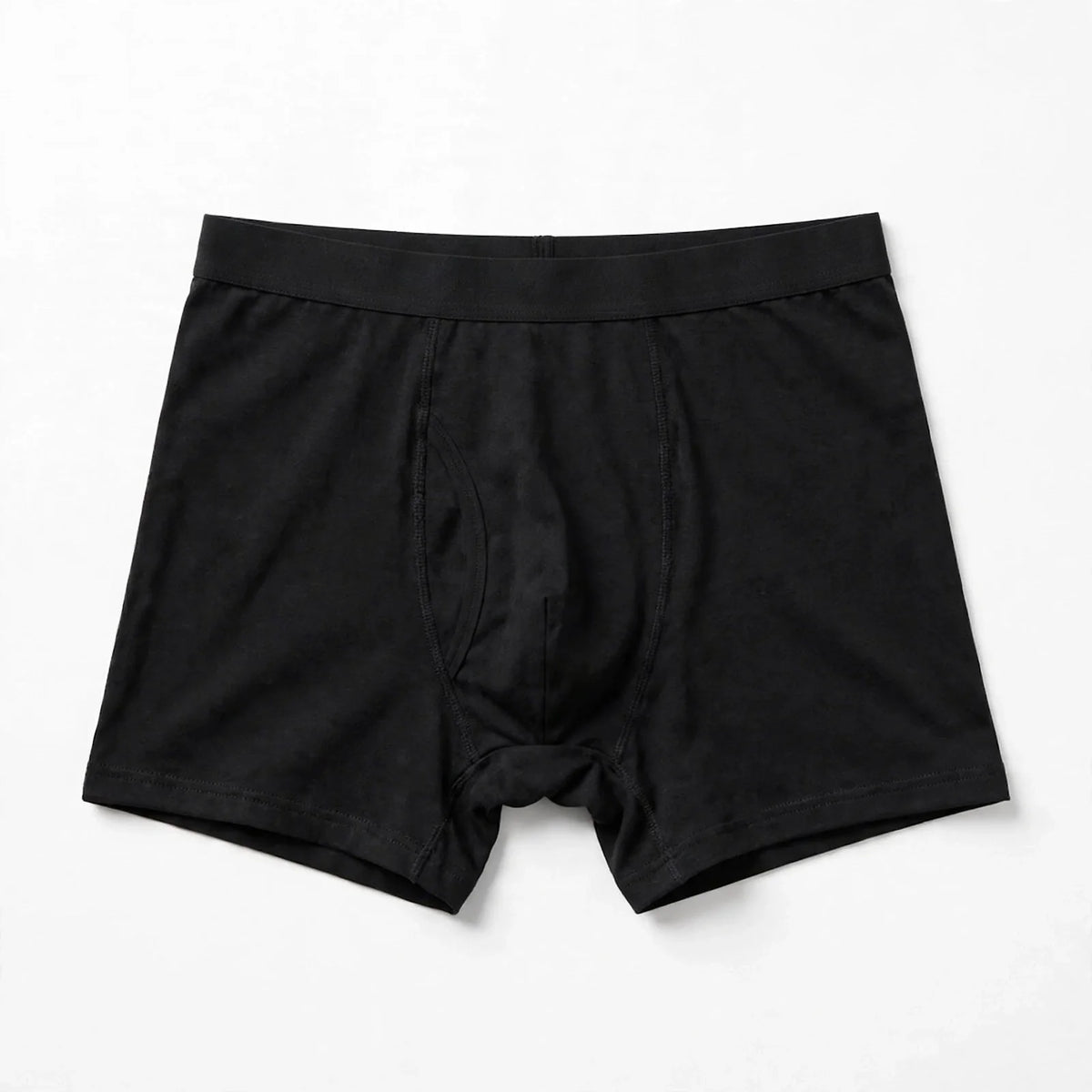
For men, a pair of washable leakproof underwear for men absorbs the steady dribble of overflow incontinence without the bulk or waste of disposables—there is also a reusable booster pad option if you want extra absorbency inside regular underwear. For heavier days, a style with a removable absorbent pad makes changes easy. A mesh laundry bag keeps the underwear in good shape through repeated washes.
Review your medications
Bring a full list of your prescriptions and over-the-counter medicines to your appointment. Your doctor may be able to adjust a drug that is making emptying harder.
Frequently Asked Questions
Is overflow incontinence the same as having a weak bladder?
Not exactly. A "weak bladder" is a vague phrase people use for all kinds of leaks. Overflow incontinence specifically means the bladder is not emptying fully, which is the opposite problem of an overactive bladder that contracts too often.
Can overflow incontinence go away on its own?
Rarely. Because it usually has a physical or neurological cause, it tends to persist or worsen until that cause is treated. Do not wait it out if the symptoms match the pattern described above.
Is it only a men's problem?
No. It is more common in men because of prostate enlargement, but women can develop it too—for example from severe prolapse or after pelvic surgery—so the symptoms deserve the same attention regardless of sex.
How is overflow incontinence diagnosed?
Typically with a physical exam, a check of how much urine remains in the bladder after you pee (post-void residual), urine tests, and sometimes imaging or pressure tests. It is straightforward and painless.
Can pelvic floor exercises help?
Kegels mainly help stress and urge incontinence. With overflow incontinence, over-tightening the pelvic floor can actually make emptying harder—so check with your doctor or a pelvic floor therapist before starting them.



Share:
Incontinence Pads vs. Leakproof Underwear: Which Should You Choose?
Can Medications Cause Bladder Leaks? How Common Drugs Affect Bladder Control