

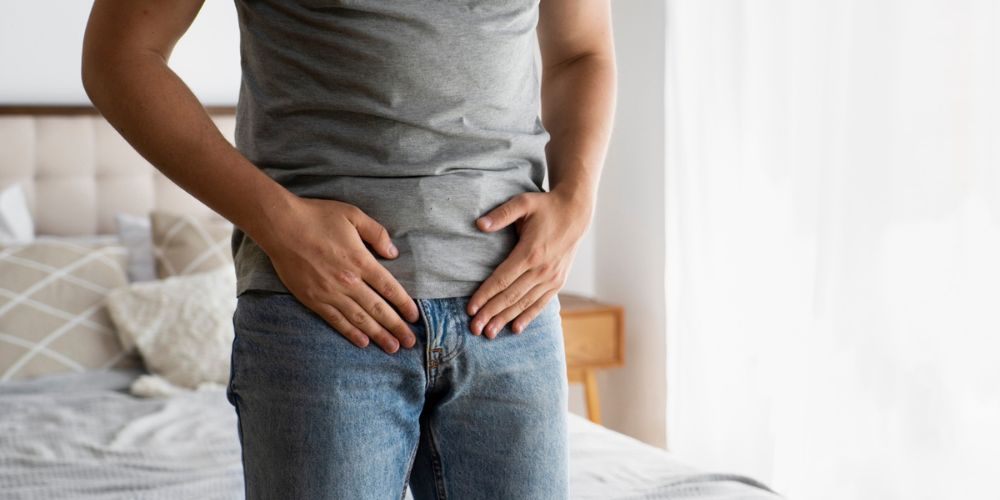
Have you ever finished urinating, pulled up your underwear, and then noticed a few drops of urine afterward?
You may have felt that your bladder was empty, only to notice dampness in your underwear or a small drop of urine shortly after leaving the bathroom.
This is often called post-micturition dribble, also known as post-void dribbling.
It is different from leaking urine when coughing, sneezing, exercising, or experiencing a sudden urge to urinate. Understanding the timing of the leakage can help you identify the pattern and decide whether it needs further attention.
What Is Post-Micturition Dribble?
Post-micturition dribble means involuntary leakage of a small amount of urine shortly after finishing urination.
The leakage may happen:
- Immediately after leaving the toilet
- After walking away from the bathroom
- When putting on underwear
- After sitting down
- After bending or moving around
The important feature is the timing: the urine leakage happens after you believe you have finished urinating.
Why Does Urine Leak After I Finish Peeing?
One possible explanation is that a small amount of urine remains in the urethra after the main flow has stopped.
When you stand, walk, move, or change position, that urine can leave the urethra and appear as a few drops in your underwear.
This is particularly relevant to men because of the length and anatomy of the male urethra, although post-micturition dribble can occur in women as well.
Other urinary symptoms can also occur alongside post-void dribbling, so repeated or bothersome leakage should not automatically be assumed to have only one cause.
Is Post-Micturition Dribble the Same as Urinary Incontinence?
Post-micturition dribble is a form of involuntary urine leakage, but the pattern is different from several other common types of urinary incontinence.
| Leakage pattern | Typical trigger |
|---|---|
| Post-micturition dribble | Shortly after urinating |
| Stress incontinence | Coughing, sneezing, lifting, exercise |
| Urge incontinence | Sudden strong urge to urinate |
| Overflow-related leakage | Bladder does not empty normally |
People can also experience more than one type of urinary leakage.
Why Is It More Commonly Discussed in Men?
Post-micturition dribble is particularly common among men and may occur even when the main urine stream seems normal.
The male urethra is longer than the female urethra. A small amount of urine can remain in the urethra after the main stream has ended and then escape with movement.
Age, prostate-related urinary symptoms, pelvic floor function, and other urinary problems may also influence urinary symptoms in men.
However, post-micturition dribble is not automatically a sign of prostate disease.
Can It Be Related to the Prostate?
Sometimes post-urination dribbling occurs alongside other lower urinary tract symptoms, including changes in urine flow, difficulty starting urination, increased frequency, urgency, or a feeling that the bladder has not completely emptied.
Prostate enlargement can contribute to urinary symptoms in men, but post-micturition dribble alone does not establish a prostate problem.
If you also have difficulty starting urination, a weak or interrupted stream, repeated nighttime urination, or difficulty emptying your bladder, it is worth discussing the overall pattern with a healthcare professional.
What Can Help With Post-Micturition Dribble?
Several simple techniques may reduce the amount of urine left behind in the urethra.
1. Give yourself enough time
Do not immediately rush away from the toilet when the main urine stream stops.
Allow a few extra moments for urination to finish naturally.
2. Try a gentle final movement
Some men find that gently contracting the pelvic floor after urination can help clear remaining urine from the urethra.
The goal is not to repeatedly squeeze as hard as possible.
A gentle, controlled contraction may be more useful than excessive force.
3. Consider urethral milking
Some men are taught a technique commonly called urethral milking, which involves gently moving remaining urine forward through the urethra after urination.
If you want to try this technique, it is reasonable to ask a healthcare professional to demonstrate the appropriate method, particularly if you have pain, recent surgery, or other urinary problems.
4. Relax rather than strain
Trying to force the last drops of urine out by straining is not necessarily helpful.
Normal urination requires coordinated relaxation of the pelvic floor and urinary sphincter.
Can Pelvic Floor Exercises Help?
Pelvic floor muscle training may help some men and women with urinary leakage.
For men experiencing post-micturition dribble, pelvic floor awareness and controlled contractions may be useful as part of a broader approach.
However, pelvic floor training is not simply about squeezing harder or doing as many repetitions as possible.
The muscles also need to relax properly during urination.
If you have pelvic pain, difficulty relaxing the pelvic floor, or worsening symptoms when doing pelvic floor exercises, seek professional guidance rather than continuing to increase the number of contractions.
What If I Still Feel Like My Bladder Is Full?
That is different from simply having a few drops of urine leak after finishing.
A persistent feeling that your bladder has not emptied, especially when accompanied by a weak stream, difficulty starting urination, frequent small amounts of urine, or difficulty urinating, may warrant medical evaluation.
These symptoms can sometimes be associated with urinary retention or obstruction.
Do not repeatedly strain or force urine out if you are having difficulty urinating.
What About Men After Prostate Surgery?
Men recovering from prostate surgery may experience several different types of urinary leakage.
Post-micturition dribble can occur, but leakage with coughing, standing, walking, lifting, or exercise may reflect a different mechanism.
After prostate surgery, it is particularly useful to identify exactly when leakage occurs rather than treating every episode as the same type of incontinence.
Can Lifestyle Habits Make a Difference?
General bladder-health habits can still be useful even when the leakage occurs after urination.
- Stay adequately hydrated.
- Review excessive caffeine or alcohol intake if these worsen urinary symptoms.
- Avoid repeatedly holding urine for very long periods.
- Address constipation if it is a recurring problem.
- Stay physically active when appropriate.
- Pay attention to changes in urine flow or bladder emptying.
These habits may support overall bladder health, but they do not necessarily eliminate post-micturition dribble by themselves.
Can Incontinence Underwear Help?
If the leakage is only a few drops, you may not need a high-absorbency product.
Some people prefer a discreet absorbent underwear option when they want additional protection from unexpected dampness.
The important point is to match the level of protection to the actual amount of leakage.
When Should You See a Healthcare Professional?
Consider getting evaluated if post-urination leakage is persistent, worsening, or accompanied by other urinary symptoms.
Pay particular attention to:
- Difficulty starting urination
- A weak or interrupted urine stream
- A persistent feeling that the bladder has not emptied
- Frequent urination with only small amounts each time
- Increasing urinary urgency
- Pelvic or abdominal pain
- Pain or burning when urinating
- Blood in the urine
- Repeated urinary tract infections
- Difficulty urinating or inability to urinate
Inability to pass urine or empty the bladder requires prompt medical attention.
How to Think About the Pattern
| If leakage happens... | Consider the pattern |
|---|---|
| Only after urinating | Post-micturition dribble |
| When coughing or moving | Possible stress leakage |
| After a sudden urge | Possible urge leakage |
| With difficulty emptying | Needs evaluation |
This simple distinction can help you describe your symptoms more accurately.
A Simple Daily Approach
- Finish urinating without rushing.
- Relax rather than strain.
- Use an appropriate gentle technique if recommended by a professional.
- Notice whether leakage happens only after urination or at other times too.
- Track additional symptoms such as urgency, weak flow, or incomplete emptying.
- Seek medical advice if symptoms persist, worsen, or interfere with daily life.
The Bottom Line
A few drops of urine after you finish peeing may be post-micturition dribble. It can happen when a small amount of urine remains in the urethra and is released after you stand or move.
It is particularly common in men, but it can occur in women as well.
The key is to distinguish occasional post-urination dribbling from other forms of urinary leakage. If you also have a weak stream, difficulty emptying your bladder, pain, blood in your urine, or worsening urinary symptoms, it is worth getting evaluated.
Understanding exactly when the leakage happens is often the first useful step toward understanding why it happens.
Frequently Asked Questions
Why do I leak urine after I finish peeing?
A few drops of urine after urination may be post-micturition dribble. A small amount of urine can remain in the urethra and leak out after you stand, walk, or change position.
What is post-micturition dribble?
Post-micturition dribble is involuntary leakage of a small amount of urine shortly after finishing urination. It is also called post-void dribbling.
Is post-micturition dribble common in men?
Yes. It is commonly discussed in men because the male urethra is longer, which can allow a small amount of urine to remain after the main urine stream has stopped.
Is post-void dribbling the same as urinary incontinence?
Post-micturition dribble is a form of involuntary urine leakage, but its timing differs from stress incontinence or urge incontinence. Leakage occurs shortly after urination rather than primarily during coughing, movement, or sudden urgency.
Can prostate problems cause urine leakage after urination?
Prostate-related urinary symptoms can occur alongside post-urination dribbling, but post-micturition dribble alone does not mean you have a prostate problem.
Can pelvic floor exercises help post-micturition dribble?
Pelvic floor training may help some people with urinary leakage. However, the pelvic floor also needs to relax normally during urination, so excessive squeezing is not necessarily beneficial.
What can I do to reduce urine drops after peeing?
Allow enough time to finish urinating, avoid straining, and consider learning an appropriate post-void technique from a healthcare professional if needed. Tracking when the leakage occurs can also help identify the pattern.
Why do I still feel like I need to pee after urinating?
A persistent feeling of incomplete emptying is different from occasional post-micturition dribble. If it happens regularly, particularly with a weak stream or difficulty starting urination, it should be evaluated.
Can post-micturition dribble happen after prostate surgery?
Men recovering from prostate surgery can experience several forms of urinary leakage. Post-micturition dribble may occur, but leakage during coughing, standing, walking, or exercise may represent a different pattern.
When should I see a doctor about urine leakage after peeing?
Seek medical advice if leakage is persistent or worsening, or if it occurs with difficulty urinating, incomplete bladder emptying, weak flow, pain, burning, blood in the urine, recurrent urinary infections, or other significant urinary symptoms.
Related Reading
- Can Constipation Cause Bladder Leaks? The Connection Between Bowel and Bladder Health
- How to Choose Incontinence Underwear: Absorbency, Fit, Comfort, and Everyday Use
- How to Tell If Your Bladder Leaks Are Stress or Urge Incontinence
Looking for discreet, reusable protection? Explore Rooces women's and men's washable incontinence underwear designed for everyday confidence.



Share:
Why Do I Leak Urine When I Stand Up? Causes, Patterns, and What Can Help
Urinary Incontinence and Aging: What Changes, What’s Common, and What’s Worth Checking