

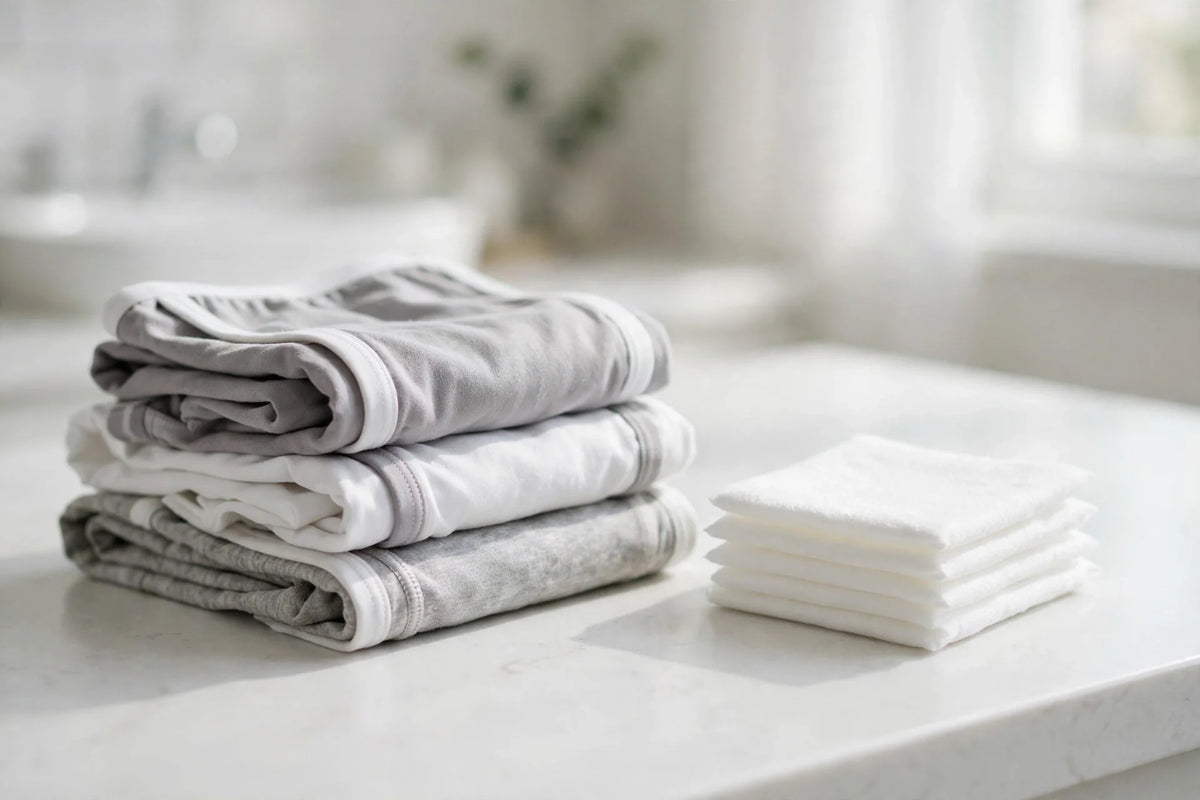
The short answer: Incontinence pads are best as a short-term or backup solution for very light leaks, while washable leakproof underwear usually wins for daily, long-term use: it feels like regular underwear, nothing shifts or bunches, it costs less over time, and it keeps hundreds of disposables out of landfills. The right choice depends on your leak level, lifestyle, and budget — and plenty of people end up using both.
This guide compares them side by side so you can choose with confidence.
What Are Incontinence Pads?
Incontinence pads are disposable, adhesive-backed absorbent pads that stick inside your regular underwear. They come in several sizes: thin liners for light dribbles, longer day pads for light-to-moderate leaks, and extra-long overnight versions. Most share the same basic design: a soft top layer that pulls moisture in, an absorbent core that locks it away, a waterproof backing, and an adhesive strip to hold everything in place.
Pads are widely available, easy to try, and require no washing — you use one and throw it away. The downsides are practical: pads can bunch, shift, or peel up at the edges during the day; the waterproof backing can feel warm or make a faint crinkle sound; and because they are single-use, the ongoing cost adds up fast. Out and about, you also need to carry spares plus a discreet bag for used ones, which is why our guide on managing bladder leaks at work is a popular read.
What Is Leakproof Underwear?
Leakproof underwear — also called washable incontinence underwear — looks and feels like ordinary underwear, but has a built-in multi-layer absorbent gusset: a stay-dry top layer against the skin, an absorbent middle that traps liquid, and a waterproof outer barrier that protects your clothes. After wearing, you rinse, machine wash, and reuse. A well-made pair typically survives 100 or more wash cycles.
Because the absorbency is built into the garment, there is nothing to stick on, nothing to shift, and no plastic crinkle. You can read exactly how the layers work in our guide to how reusable bladder leak underwear works.
Pads vs. Leakproof Underwear: Side-by-Side Comparison
| Incontinence Pads | Leakproof Underwear | |
|---|---|---|
| Upfront cost | Low per item (usually under $1 each) | Higher per pair (roughly the price of premium underwear) |
| Cost over a year | High — 2–3 pads a day typically adds up to several hundred dollars a year | Low — a rotation of 5–7 pairs often pays for itself within a few months |
| Feel and discretion | Can bunch, shift, or feel bulky; faint crinkle possible | Feels like regular underwear; no shifting, no noise |
| Absorbency range | Light to moderate; heavy leaks need frequent changes | Light to moderate; booster pads add capacity for heavier days |
| Odor control | Varies; a saturated pad held against the body can develop odor | Stay-dry top layer and quick-change routine keep odor low |
| Daily effort | No laundry — but you must buy, carry, and dispose of pads | One extra laundry step: rinse, wash with your regular load |
| Environmental impact | Hundreds of single-use plastics per year per person | Reusable for 100+ washes; far less waste |
| Best for | Occasional light leaks, travel backup, trying things out | Daily protection, active days, long-term use |

Cost: Doing the Rough Math
At first glance, pads look cheaper — a single pad costs well under a dollar. But two to three pads a day means 60 to 90 pads a month, adding up to several hundred dollars a year, every year, for as long as you need protection.
A small rotation of washable leakproof underwear — five to seven pairs — is a larger one-time purchase, but the pairs last a year or more of regular washing. For most daily users, the underwear pays for itself within three to four months. Our broader disposable vs. reusable comparison breaks down the long-term numbers in more detail.
Comfort and Discretion
Comfort is where leakproof underwear has the clearest edge. A pad is an extra object inside your underwear: it can ride up, bunch, or peel loose when you move, especially during exercise or long walks. The waterproof backing traps heat and can produce a faint crinkle some people find embarrassing in quiet rooms.
Leakproof underwear avoids all of that because the absorbent layers are sewn into the garment itself. It moves with you, feels like normal underwear, and stays silent — a big plus for gym sessions, jogging, and yoga. (If exercise leaks are your main concern, see why leaks happen during workouts.)
Absorbency: Matching Protection to Your Leaks
Both options cover light to moderate leaks well. Pads top out at moderate absorbency — beyond that, you are changing pads very frequently. Leakproof underwear comes in light, moderate, and heavy absorbency levels, and some styles accept removable booster pads that add capacity on heavy days.
One practical tip: whatever you choose, match the absorbency to your actual leak level rather than over-buying. Oversized protection is bulkier and less comfortable. Our guide on choosing incontinence underwear walks through how to assess what you need.
Odor Control
Odor is mostly about how quickly moisture is moved away from the body and how often protection is changed. A pad worn for many hours can develop odor as bacteria grow in the warm, moist environment; leakproof underwear with a stay-dry top layer wicks moisture away from the skin, which helps. The real rule is the same for both: change into fresh protection on a sensible schedule.
Washing and Care
This is the one area where pads win on convenience: nothing to wash. Leakproof underwear adds one small laundry habit — rinse after wearing, then machine wash with your regular laundry (skip fabric softener, which coats absorbent fibers). Most users say it becomes automatic within a week. Full routine: how to wash reusable bladder leak underwear.
Environmental Impact
A daily pad user sends hundreds of single-use plastic-backed pads to landfill every year, each taking decades to break down. Washable underwear replaces most of that waste with a handful of garments that last 100+ washes. If sustainability matters to you, reusables win — no contest.
When Do Pads Still Make Sense?
Pads are not obsolete. They are genuinely useful when:
- You only leak occasionally and do not want to invest in a full rotation of specialty underwear yet.
- You are traveling and want to minimize laundry — pack pads for the trip, washables for home.
- You are recovering from childbirth or surgery and your needs are changing week to week.
In other words, pads are a great bridge product: for trying things out, for travel, and for backup. For most people with regular leaks, they are not the best everyday answer.
Which Should You Choose?
Choose leakproof underwear if you leak most days, want the most comfortable and discreet option, care about long-term cost, or prefer a sustainable routine. Choose pads if your leaks are rare and very light, you are still figuring out what works, or you need a no-laundry backup for travel. Many people land on a hybrid: washable underwear for daily life, a few pads tucked in a bag for just-in-case moments.
Ready to make the switch? Browse our women's washable high-waisted incontinence underwear or men's discreet washable incontinence underwear — both look and feel like the underwear you already love.
Frequently Asked Questions
Can I wear a pad inside leakproof underwear for extra protection?
Yes — many people do this on heavy days or overnight. The pad adds capacity, and the waterproof layer of the underwear acts as a safety net if the pad shifts or reaches its limit.
Is leakproof underwear as absorbent as pads?
For light to moderate leaks, yes — and heavy-absorbency styles with booster pads can match or exceed what a single pad holds. The key difference is comfort: the same absorbency feels much less bulky when it is built into the garment.
How many pairs of leakproof underwear do I need?
Five to seven pairs is the sweet spot for most people: enough to wear one daily while the rest go through the wash. If you do laundry less often, add a couple more pairs.
Which is better for overnight leaks?
Overnight usually favors leakproof underwear in a higher absorbency level, since pads tend to shift while you sleep.
Do I need to know whether I have stress or urge incontinence before choosing?
Not necessarily — both product types work for both kinds of leaks. But understanding your pattern helps you pick the right absorbency and decide whether extras like bladder training might reduce leaks over time. If you are unsure, our guide on telling stress and urge incontinence apart can help.
Related Reading
- Disposable vs. Reusable Incontinence Underwear: Cost, Comfort, and Sustainability Compared
- How to Choose Incontinence Underwear: Absorbency, Fit, Comfort, and Everyday Use
- How to Wash and Care for Reusable Bladder Leak Underwear
- Bladder Leaks at Work: How to Stay Comfortable and Confident During the Workday



Share:
Can Stress and Anxiety Make Bladder Leaks Worse? The Mind–Bladder Connection
What Is Overflow Incontinence? Signs, Causes, and What Can Help