

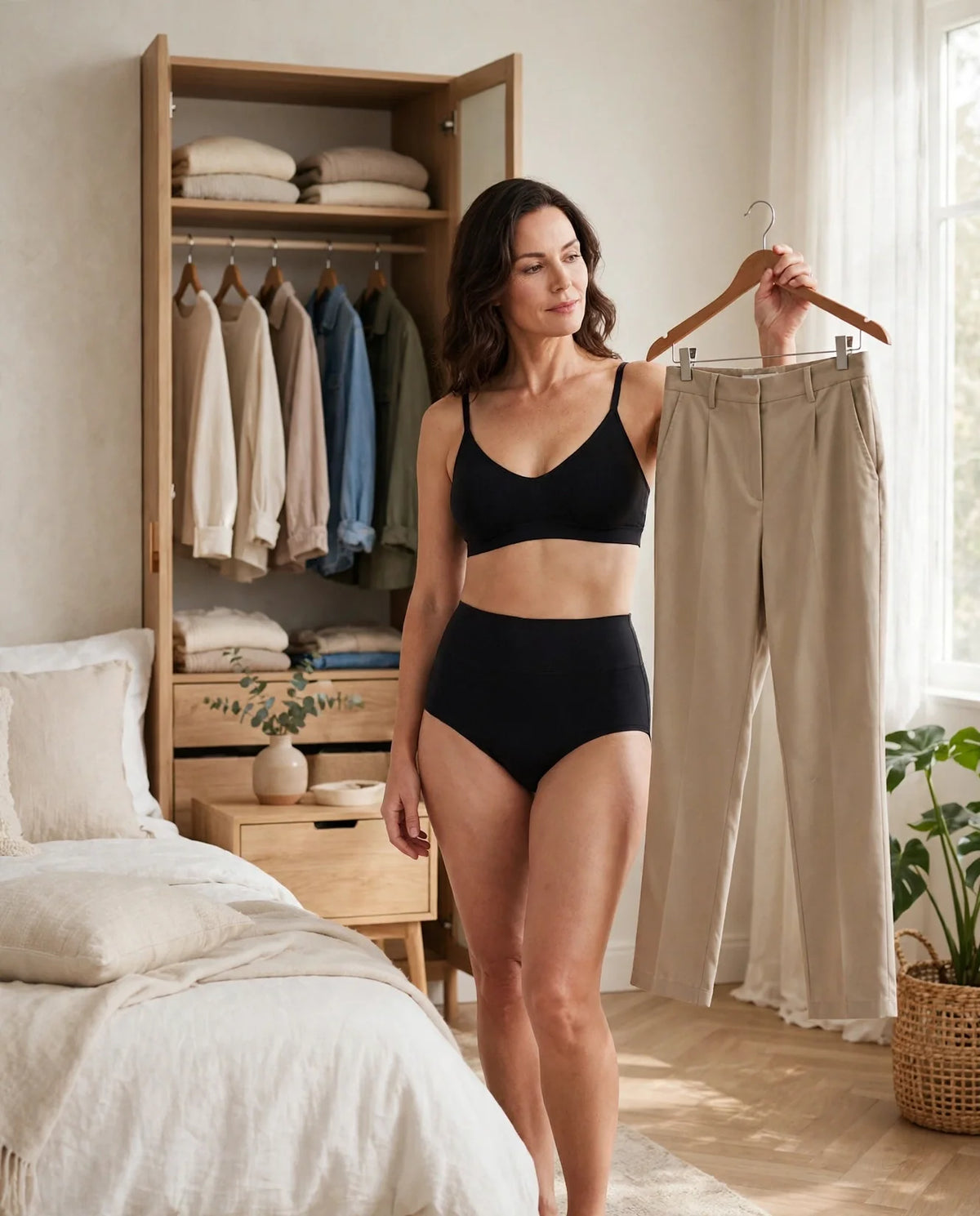
The short answer: Yes, tight clothes can make bladder leaks worse for some people. Constant pressure around your waist and lower belly pushes down on your bladder and pelvic floor, which can turn a small leak into a bigger one — especially if you already have stress incontinence. Choosing a more forgiving waistband won't cure leaks, but it can noticeably reduce how often and how much you leak during the day.
If you have ever noticed that your bladder behaves worse on "skinny jeans days," you are not imagining it. Many people report more dribbling, more urgency, and even more frequent bathroom trips when they wear tight waistbands, shapewear, or stiff denim. Here's why that happens — and what to wear instead so your clothes stop working against your bladder.
Why Pressure Around Your Waist Can Worsen Leaks
Your bladder sits low in your pelvis, and your pelvic floor muscles act like a hammock supporting it. When you cough, laugh, or sneeze, those muscles tighten to keep urine in — this is the mechanism behind stress urinary incontinence.
Tight clothing adds a different kind of pressure: sustained, hours-long compression around your abdomen. This matters because:
- It raises intra-abdominal pressure. A tight waistband squeezes your belly the same way a heavy lift or chronic coughing does. That downward pressure loads the pelvic floor continuously, making it easier for small leaks to slip past — the same mechanism described in our guide on stress vs. urge incontinence.
- It can trigger urgency. Constant abdominal pressure can stimulate bladder nerves, making you feel like you need to pee more often. Tight garments are a known bladder irritant for people prone to urgency, alongside caffeine and alcohol (see our articles on caffeine and alcohol).
- It amplifies other triggers. If you already leak when you sneeze or stand up quickly, a tight waistband can add just enough extra pressure to turn a near-miss into a leak.
Clothing is rarely the cause of incontinence on its own — but it can be the extra nudge that makes existing leaks more frequent and more annoying.
The Worst Offenders in Your Closet
Not all tight clothes affect your bladder equally. The worst culprits are the ones that concentrate pressure right over your lower belly or restrict how you breathe and move:
- Skinny jeans and stiff high-rise trousers. A tight, non-stretch waistband sitting right on your bladder is the classic offender — especially after a meal when your belly is a little fuller.
- Shapewear and compression garments. These are designed to squeeze your midsection. If you wear them for hours, that squeeze is pressing on your bladder the entire time.
- Tight belts cinched at the waist. Same principle, smaller area — a tight belt puts pressure exactly where you don't want it.
- Body-hugging athletic leggings. Many women notice leaks during workouts, but even all-day wear of very compressive leggings can contribute to urgency.
Tight vs. Bladder-Friendly: What to Swap In
| Instead of this… | Try this… | Why it helps |
|---|---|---|
| Rigid skinny jeans with no stretch | Stretch denim, elastic-waist or drawstring trousers | Less constant pressure on the lower abdomen |
| Tight shapewear worn all day | Light smoothing shorts for short periods only | Limits hours of abdominal compression |
| Cinched belt at the waistline | Belt worn loosely or on the hips | Keeps pressure off the bladder zone |
| Very compressive all-day leggings | High-waist leggings with a soft, wide band | Distributes pressure instead of digging in |
| Tight synthetic underwear | High-waisted, absorbent, breathable underwear | Comfort plus backup protection against leaks |
Your Base Layer Matters More Than Your Outfit
Even with a forgiving wardrobe, most people still want a safety net — and that is where the right underwear does the heavy lifting. The goal is a base layer that protects without adding pressure of its own.

A high-waisted style with a wide, soft waistband sits above the bladder zone instead of pressing into it. Built-in absorbency means small leaks are absorbed silently — no bulky pads, no rustling, no visible lines under clothes. That combination is why many women choose washable high-waisted incontinence underwear as their everyday base layer: it looks and feels like ordinary underwear while holding up to 300 ml, so leaks stay a private non-event even on dressed-up days.
Our full buyer's guide to incontinence underwear covers how to match absorbency and fit to your leak level. And if you wear your leakproof underwear daily, proper washing matters for keeping the absorbent layers effective — see how to wash and care for reusable leakproof underwear, and consider a machine-wash laundry bag to protect the fabric in the washer.
Other Dressing-Room Habits That Help
- Do a "sit test." Waistbands feel looser standing than sitting. Sit down in the fitting room — if the waistband digs into your belly when seated, it will press on your bladder all day.
- Dress in layers. A dress or tunic over leggings gives you comfort plus full coverage, a popular strategy for long workdays (see bladder leaks at work).
- Give your belly room after meals. Bladder pressure is highest when your stomach is full. Adjustable waistbands or relaxed fits at lunch can make a real difference.
- Choose breathable fabrics near the skin. Tight synthetics trap heat and moisture, which can worsen odor and skin irritation when leaks happen. Cotton-blend or moisture-wicking base layers keep you fresher.
When Clothing Isn't the Problem
If your leaks continue even in the loosest clothes, your clothing was never the main driver — and that is useful information. Persistent leaks, sudden changes in pattern, pain, blood in urine, or trouble emptying your bladder are all reasons to talk to a clinician. Our guide on when to see a doctor about bladder leaks walks through the warning signs worth checking.
The Bottom Line
You don't need to give up looking put-together — you just need clothes that don't squeeze your bladder for eight hours straight. Swap the stiff waistband for something with give, put a comfortable absorbent base layer underneath, and many people find their daytime leaks become quieter, smaller, and less frequent.
Shop washable high-waisted leakproof underwear — discreet protection that looks like everyday underwear, so your wardrobe choices are about style, not anxiety.
FAQ
Can wearing tight jeans actually cause incontinence?
Tight jeans are very unlikely to cause incontinence in a healthy bladder, but they can make existing stress incontinence or urgency noticeably worse by increasing abdominal pressure on the bladder and pelvic floor.
Is shapewear bad for your bladder?
Wearing firm shapewear for long hours can increase bladder pressure and urgency for some people. If you leak more on shapewear days, try limiting wear to a few hours and switching to a lighter garment for daily use.
Does a high waistband press on the bladder more than a low one?
It depends on the fit, not the height. A wide, soft high waistband that sits above the belly button usually distributes pressure gently, while a tight band at the natural waistline can press directly on the bladder zone. Comfort is the test — nothing should dig in.
What underwear is best for bladder leaks during the day?
High-waisted, breathable underwear with built-in absorbency works best for most women: no extra pressure from pads or tight bands, plus discreet leak protection that doesn't change how your clothes fit. Washable options like leakproof underwear with a soft high waistband double as comfortable everyday underwear.
Can tight clothes cause the urge to pee more often?
For some people, yes. Constant abdominal pressure can irritate bladder nerves and create a more frequent urge to urinate — similar to how caffeine or alcohol can act as bladder irritants. If you notice the pattern, loosening your waistband is an easy first experiment.



Share:
Can Smoking Cause Bladder Leaks? The Link Between Tobacco and Bladder Control
How Many Pairs of Incontinence Underwear Do You Need? A Simple Guide to Stocking Your Drawer