


The short answer: how to store incontinence underwear discreetly comes down to one dry, easy-to-reach spot — a bedroom drawer or a plain box on a closet shelf — plus a simple laundry loop for used pairs. No special containers. No labels that announce anything. Just a setup you can use half-asleep at 2 a.m. without thinking about it.

Most storage advice skips the part that actually matters. It's not about hiding things like you're ashamed of them. It's about making your morning easier. When your underwear lives in three different places — two pairs in the bathroom, one in a suitcase from last month's trip, the rest still in the laundry basket — you end up digging around when you're already running late. A single home base fixes that.
Where Should You Keep Them Day to Day?
Pick the spot where you get dressed. For most people, that's the bedroom, not the bathroom. Bathrooms get steamy. Steam and damp air are not friends of elastic and absorbent layers over time, and a bathroom cabinet is usually the first place a guest opens when they need a plaster.
Your bedroom drawer works. So does a shelf in your closet, or a fabric storage box on top of the wardrobe if drawer space is tight. The test is simple: can you grab a pair without moving five other things first? If yes, that's the spot.
Keep your everyday pairs there, and keep the rest — spares, seasonal extras, the higher-absorbency pairs you only wear overnight — in the same drawer or right beside it. One zone. Not a treasure hunt.
How to Store Incontinence Underwear Discreetly at Home
Discreet storage is mostly about boring containers. A plain drawer divider. An unmarked fabric bin. A zippered pouch inside your bag. Nothing with a label, nothing see-through sitting on an open shelf.
Here's a setup that works in a shared house and costs almost nothing:
- One drawer, two zones. Clean pairs folded on one side, a small mesh laundry bag on the other for used pairs waiting for wash day. The machine-wash laundry bag is made for this — toss the whole bag in the wash instead of handling each pair separately.
- Fold, don't ball. Folded pairs stack neatly, take up less room, and last longer. Rolled-up pairs at the back of a drawer are pairs you forget you own.
- Keep a spare where you actually need it. One pair in your work bag or car glove box, tucked in a waterproof carry pouch, saves the day more often than a drawer full of spares at home ever will.
- Skip the special "incontinence" box. A plain box from any home store does the same job without advertising its contents to anyone who opens your closet.
That's it. No system to maintain, no color-coding, no spreadsheet. If a setup needs a spreadsheet, you won't keep it up. Trust me on that one.
A Drawer Setup That Stays Tidy (Even on Busy Weeks)
Laundry is where most storage systems fall apart. Clean pairs go in the drawer, used pairs pile up on the bathroom floor, and by Thursday you're out of clean ones even though you own twelve pairs. Sound familiar?
Try a simple loop. When you change, the used pair goes straight into the mesh bag. When the bag is about two-thirds full — usually the third load of laundry this week for a daily wearer — the whole bag goes in the machine. Clean pairs come out, get folded, and go back to the same drawer spot. Same loop, every week.
For a fuller guide to the washing side of this, see How to Wash and Care for Reusable Bladder Leak Underwear. And if odor is your worry, Do Reusable Incontinence Underwear Smell? covers what actually causes it and how to stop it.
What If You Share Your Home?
Guests. Grandkids raiding drawers. A partner who "tidies" by moving everything. Shared homes need one extra rule: your pairs live in your drawer, not a communal one.
A few small moves help a lot:
- Use the top drawer of your own dresser, or a lidded box on your side of the closet. Lids beat labels — nobody opens a lidded box casually the way they open a drawer.
- If grandkids visit, keep the box on a higher shelf. Not because there's anything to be embarrassed about, but because small hands unfold everything. Anyone who's hosted a toddler knows that drawer ends up empty in about four minutes.
- Talking to a partner or family member about it? You don't owe anyone a big announcement. A short, plain sentence works: "I keep my leakproof underwear in this drawer — that's my spot." Most people just nod and move on.
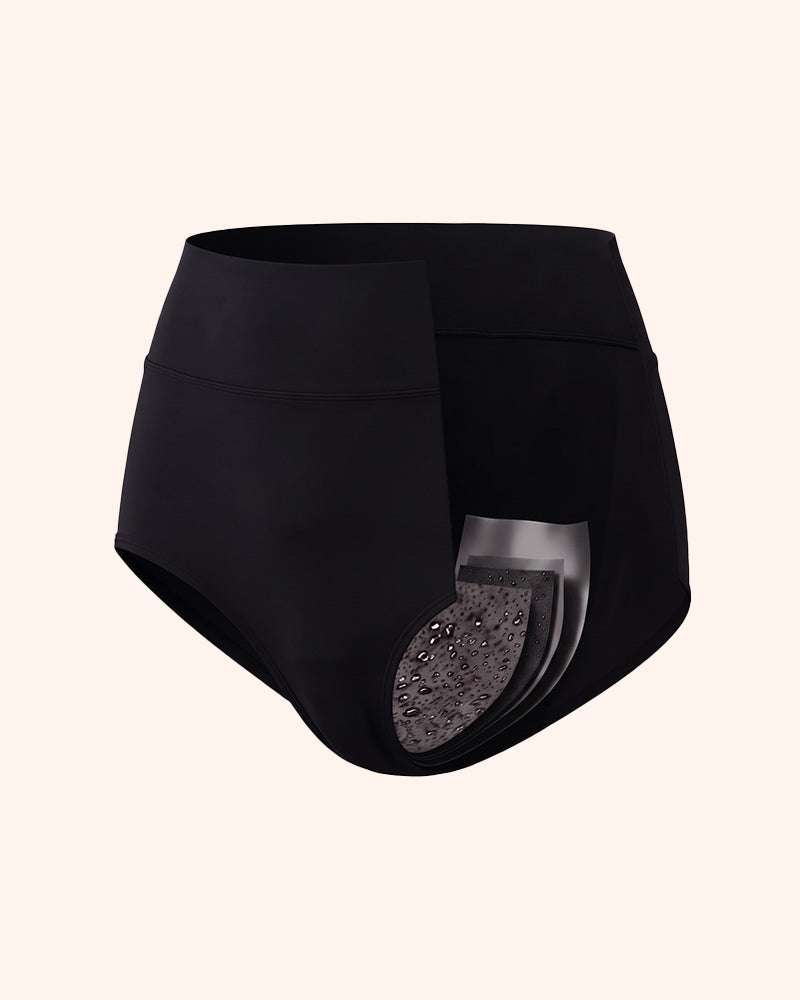
And if someone does see them? So what. They're underwear. They look like underwear. A pair of women's leakproof underwear in black, folded in a drawer, draws about as much attention as a pair of socks. The secrecy we imagine is almost always bigger than the reality.
What Not to Do With Storage
Three habits quietly wear your underwear out faster:
- Don't store them damp. Pairs that come out of the wash need to be fully dry before they go in a drawer or a closed bag. Trapped dampness is how musty smells start.
- Don't leave them in a hot car or on a radiator. Heat breaks down elastic over time. A spare pair in the car is smart; a spare pair baking on the dashboard all summer is not.
- Don't keep them in plastic bags long-term. Sealed plastic traps moisture. A breathable fabric pouch or an open drawer is better for everyday storage.
How Many Pairs Should You Keep Handy?
It depends on how often you do laundry, but a simple split works for most people. If you're still figuring out your number, How Many Pairs of Incontinence Underwear Do You Need? walks through the maths.
| Spot | What to keep there | Why |
|---|---|---|
| Bedroom drawer | 5–7 clean pairs | Covers a week between washes |
| Bag or car | 1 spare pair + pouch | For changes away from home |
| Laundry area | 1 mesh bag for used pairs | Stops the bathroom-floor pile-up |
Seven pairs in the drawer, one spare in your bag, and a laundry bag doing its quiet job in the corner. That's the whole system. When your drawer starts looking thin on a Wednesday, that's your cue to run a load — not a sign you need to buy more.
If you're switching from disposables and wondering what the daily routine actually feels like, What to Pack in Your Bag for Bladder Leaks? is a handy next read, and How Do You Change Incontinence Underwear in a Public Restroom? covers the away-from-home half of the routine.
Frequently Asked Questions
How to store incontinence underwear discreetly when guests visit?
Use a lidded box or a closed drawer in your bedroom, not an open bathroom shelf. Guests rarely open bedroom drawers, and a plain box gives nothing away even if someone does glance inside your closet.
Can I store incontinence underwear in the bathroom?
You can for a day or two, but it's not the best long-term home. Bathrooms stay humid, and damp air plus closed cabinets can leave elastic and absorbent layers musty. A bedroom drawer stays drier and more private.
How many pairs should I keep in my bedroom drawer?
Five to seven clean pairs cover most people for a week between washes. Add one spare in your bag for days out, and keep the rest of your stash — overnight pairs, extras — in the same drawer zone so nothing gets lost.
Do reusable incontinence underwear need special storage?
No. Clean, fully dry, and out of direct heat is all they need. Skip sealed plastic bags for long-term storage, since trapped moisture causes odors. A drawer, a fabric bin, or a breathable pouch all work fine.
How to store incontinence underwear discreetly when traveling?
Pack clean pairs in a zippered pouch inside your suitcase, and bring a waterproof pouch for used pairs on the way home. That way nothing is loose in your bag, and the return trip smells like nothing at all.

Share:
How to Manage Bladder Leaks in Hot Weather: Staying Cool, Dry, and Confident
Why Switching From Disposable Pads to Washable Incontinence Underwear Feels Different