

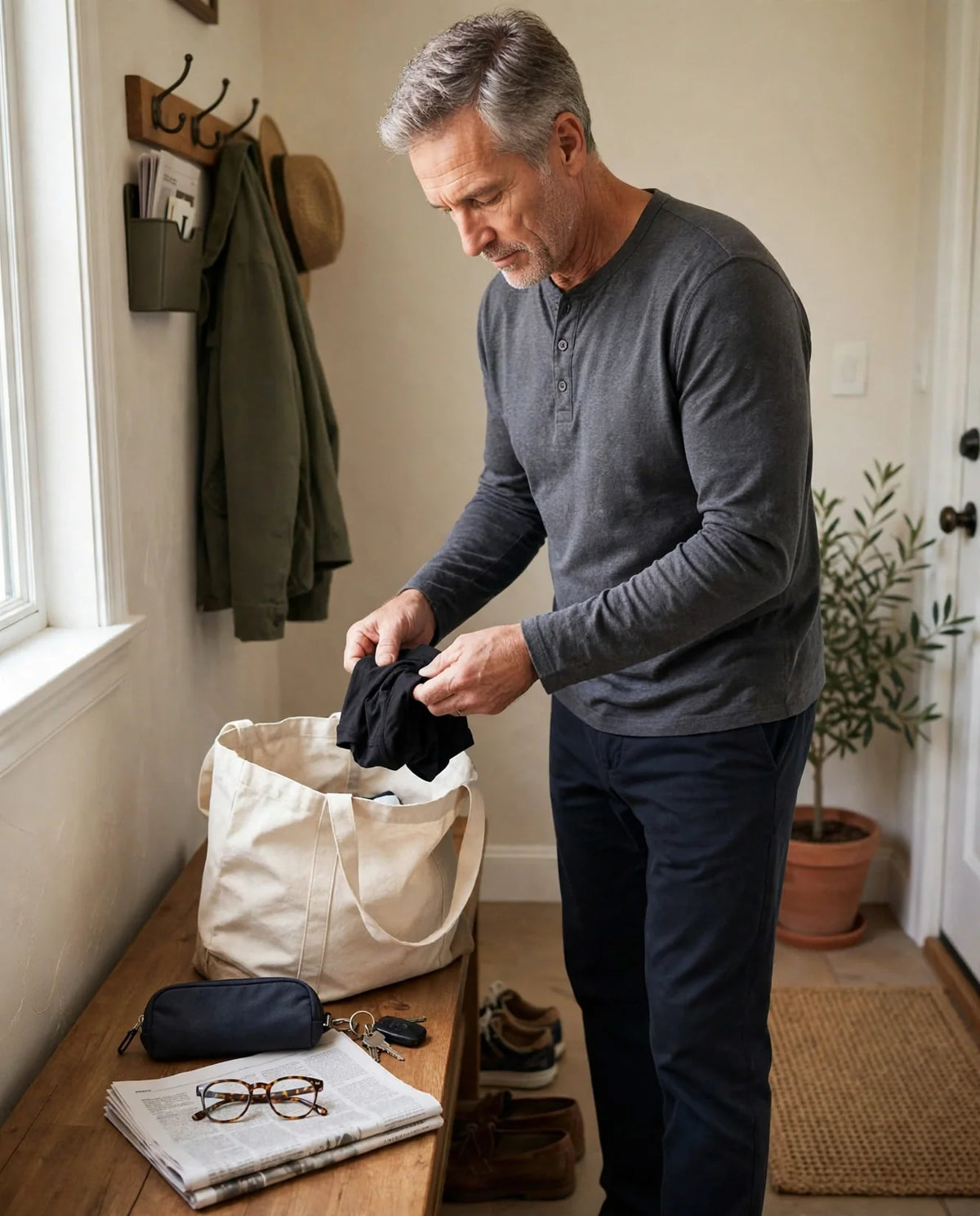
The short answer: what to pack in your bag for bladder leaks is a spare pair of leakproof underwear, two wipes, and a small waterproof pouch to carry it all in — plus a zip bag for the used pair. That's it. Everything fits inside something the size of a paperback book. If that sounds too simple to matter, keep reading. The reason it works has less to do with the gear and more to do with what your brain does when you know you're prepared.
Why does a small kit change the whole day?
Here's what actually happens on a bad-leak day. You're fine at 9 a.m. By 11:30, after your second coffee, you feel damp during a meeting and spend the next hour thinking about nothing else. Not the meeting. Not the work — just one looping thought: can anyone tell? Is there a bathroom nearby? And how long until lunch, exactly?
That mental static is the real problem, not the leak itself. A leak is a laundry event. The anxiety about a leak is what ruins the day.
When you have a kit in your bag, the loop breaks — your brain filed the problem under "handled" before you left the house. You still might need to change at 2:14 p.m. in the office restroom — but it's a five-minute errand, not a crisis. That's the whole trick. Confidence isn't a personality trait here; it's logistics.

What to Pack in Your Bag for Bladder Leaks: The Daily Checklist
This is the daily kit. It covers a normal workday, a shopping trip, a train ride across town — anywhere you're out for 6 to 10 hours.
- One spare pair of leakproof underwear. One is enough for most days. Roll it up; it takes less space than a pair of socks. If your leaks are heavier or you're often out for 12+ hours, make it two.
- A waterproof carry pouch. This is the container for the whole kit. A small waterproof pouch keeps the clean pair separate from everything else in your bag and, more importantly, gives you a discreet way to carry the used pair home.
- Two individually wrapped wipes. Unscented ones. You'll want one for yourself and one spare — trust me, one is never quite enough.
- One zip-lock bag. For the used pair, in case the pouch is occupied or you want a barrier layer. It weighs nothing and saves you once every few months.
That's the complete list. Fold the underwear, tuck the wipes and zip bag inside the pouch, drop it in your work bag or tote, and forget about it. On the days you don't need it — most days, probably — you won't even notice it's there. On the one day in three weeks when you do need it, you'll be quietly grateful at 2:14 p.m. in that restroom stall.
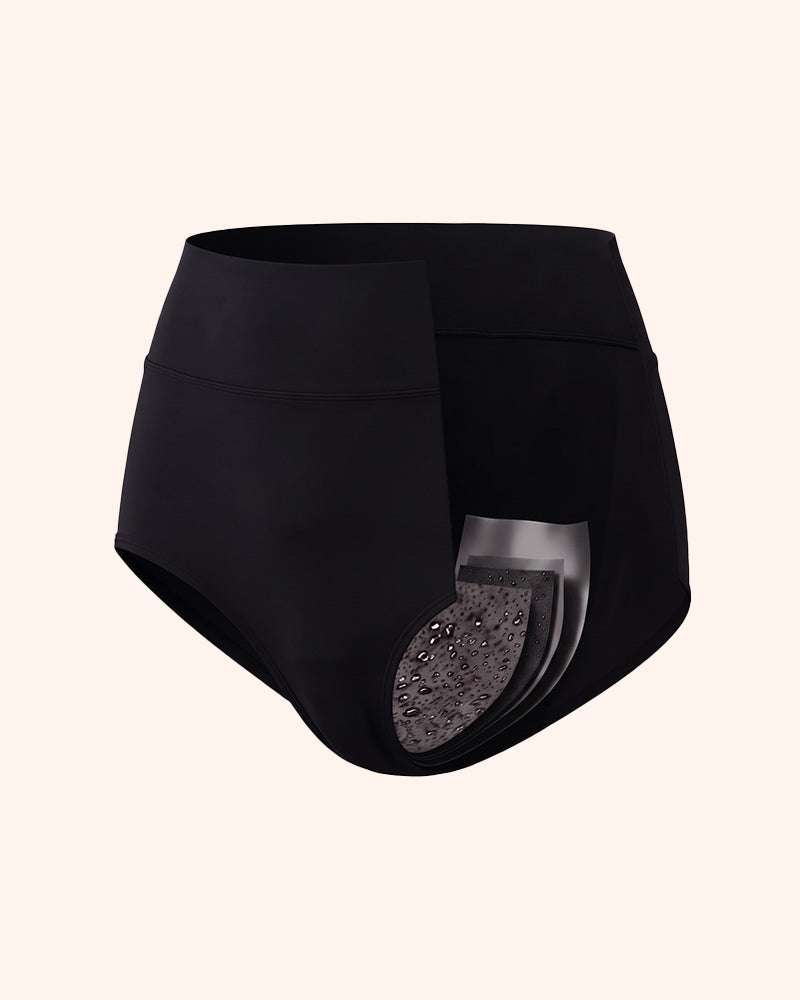
If you're still deciding which underwear to keep as your spare, our women's leakproof underwear and men's leakproof underwear both fold flat and look like ordinary underwear, so the kit itself stays discreet too.
What kind of bag or pouch works best?
Don't overthink this. The best container is the one you already carry without noticing.
For the inner kit — the part that holds the spare pair — you want something waterproof, opaque, and small. A dedicated wet bag or waterproof pouch is ideal. It seals in dampness, and unlike a cosmetic bag, it keeps odor contained on a long day. A zip cosmetic bag works in a pinch — but it won't do that second job.
For the outer bag, anything works: a work tote, a backpack, a gym bag. The kit is small enough that it doesn't dictate your choice. The one thing I'd avoid is stuffing the spare pair loose into a coat pocket — pockets collect lint, and a lint-covered spare is a small indignity you don't need.
What do you do with a used pair when you're out?
This is the question everyone actually wants to ask and nobody does. Here's the honest answer: it depends on the restroom.
If there's a lidded bin in the stall, you can bin disposable wipes and any trash — but the underwear itself should go home with you, not into a public bin. That's what the pouch is for. Used pair goes into the zip bag, zip bag into the pouch, pouch back in your bag. Done — no smell escapes a sealed pouch, and nobody watching you zip a small bag thinks twice about it.
When you get home, rinse the pair and toss it in a mesh laundry bag with the rest of the wash. Reusable underwear is built for exactly this routine — wear, rinse, wash, repeat. We've covered the full changing routine in detail in our guide to changing discreetly in a public restroom.
How many spares for a full workday?
One. For most people, one spare pair covers an 8-to-9-hour day.
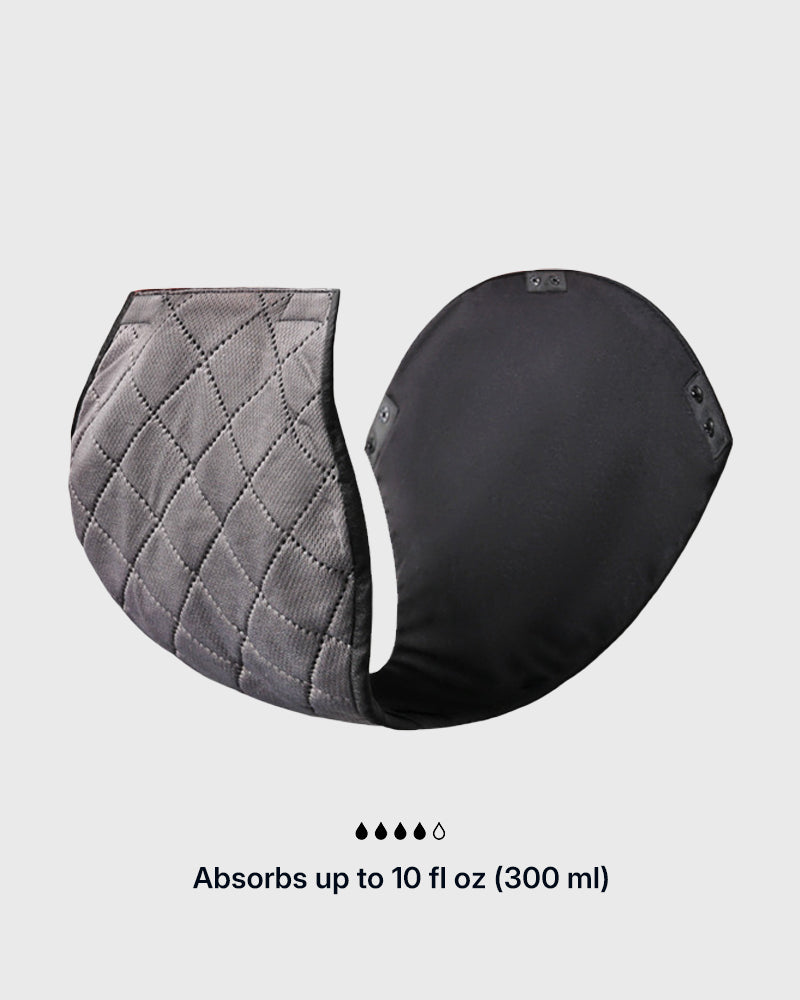
Here's the math. Leakproof underwear is designed to be worn for hours, not minutes. You're not changing after every small leak — the absorbent layer handles that. You change when the pair feels damp against your skin, which for light-to-moderate leaks is usually once a day at most, often not at all. The spare is insurance, not a schedule.
Bring two only if you know your pattern: very heavy days, a 14-hour day that runs into dinner, or a day with back-to-back meetings where you can't slip away. More than two for a single day is almost certainly overpacking — and overpacking makes the kit feel like a burden instead of a background comfort.
What changes when you're traveling?
The kit scales up, but the principle stays the same: prepared, not paranoid.
For an overnight trip, add a second spare pair and toss the pouch into your carry-on — leakproof underwear is fine in carry-on luggage, and keeping it with you beats digging through a checked bag at midnight in a hotel. For a week-long trip, three or four pairs plus access to a washing machine is the sweet spot; that's the full weekly rotation for most people.
On flights specifically, there's one underrated move: change into your freshest pair right before boarding. A 7-hour flight is the longest most of us go without easy bathroom access, and starting it dry buys you real margin. We've put together a longer checklist in our travel guide for flights and road trips.
Frequently Asked Questions
What to pack in your bag for bladder leaks on a long flight?
Same daily kit, plus one extra spare pair and a few more wipes. Keep it in your personal item under the seat, not in the overhead bin — you want it reachable during the flight, not during boarding. Change into a fresh pair right before boarding.
How do you change incontinence underwear discreetly in a public restroom?
Take the pouch into the stall, change quickly, seal the used pair in the zip bag, and drop it back in the pouch. Nobody sees anything; the whole thing takes under five minutes. The detailed step-by-step is in our public restroom guide.
What kind of pouch should I pack in my bag for bladder leaks?
A small waterproof pouch with a zip or snap closure — opaque, washable, and small enough to disappear in your bag. That's what it's made for: clean spares going out, the used pair coming home.
How many spare pairs of incontinence underwear should I bring to work?
One covers a standard workday for light-to-moderate leaks. Bring two on long or unpredictable days. The spare is backup, not a rotation — you're not expected to use it most days.
What do you do with a used pair of leakproof underwear when there's no bin nearby?
Seal it in the zip bag, put it in your pouch, and deal with it at home. A sealed pouch contains odor completely. Don't leave used underwear in a public bin or, worse, a restroom counter — take it home and rinse it.
Can I bring leakproof underwear in carry-on luggage?
Yes, without any issue. It looks and folds like regular underwear, raises no questions at security, and belongs in your carry-on rather than checked luggage — keeping it with you is part of what to pack in your bag for bladder leaks when you fly.
If you're new to all of this, start tonight: grab any small pouch you own, fold in one spare pair, add two wipes, and put it in the bag you'll carry tomorrow. Worried people will notice? Our guide on staying discreet covers that too. And for the bigger picture of getting out the door with confidence, see our piece on feeling prepared in public.
Tomorrow morning you'll walk out the door with one less thing to think about. That's the point of the kit — not the gear, but the quiet it buys you.

Share:
Why Does It Feel Like You're Leaking Urine When You're Not? Understanding Phantom Leaks
How to Go Camping With Urinary Incontinence: Tents, Trail Bathrooms, and Staying Fresh