

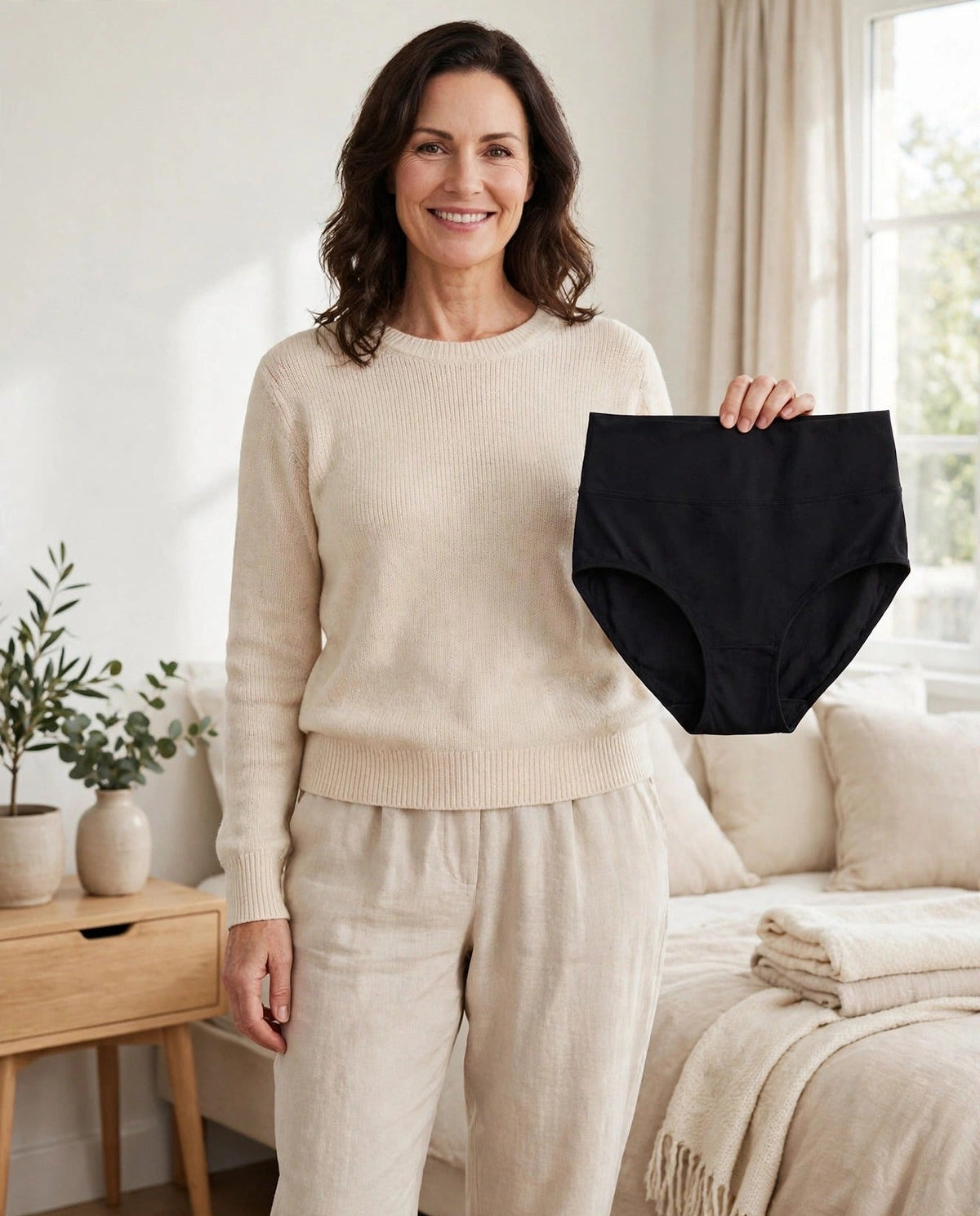
The short answer: Reusable incontinence underwear is full when the absorbent gusset feels heavy, damp against your skin, or cool and clammy — and you'll usually notice a faint odor or the first hint of leakage at the leg openings. Unlike disposable pads, there's no color-changing strip to read, so your best guide is a simple rhythm: check every 4–6 hours during the day, and change into a fresh pair each morning. If you're wondering how to tell when incontinence underwear is full, trust the "damp test": press your fingers against the gusset. If it feels wet rather than just warm, it's time to change.
Learning to read these signals takes a few days, and every body leaks differently. Below is a practical guide to the signs, the safe wear windows for day and night, and what happens if you push a saturated pair too far — so you can stay dry and comfortable without guessing.
How to Tell When Incontinence Underwear Is Full
Most quality reusable incontinence underwear hides its absorbency well — the built-in gusset locks moisture away from your skin, which is why it feels dry long after a disposable pad would feel soggy. That comfort is the point, but it also means you can't rely on feeling wet the way you might expect. Here are the reliable signs that a pair has reached its limit:
- The gusset feels heavy or thick. A fresh pair feels featherlight in the middle. As the layers absorb, the gusset gains noticeable weight and bulk. When you can feel that heaviness through your clothes, the pair is working hard — or done.
- Dampness against your skin. The top layer is designed to wick, so a little warmth is normal. But if the gusset feels genuinely damp or cool-and-clammy when you press it, the absorbent core underneath is saturated and moisture is sitting at the surface.
- A faint odor. A clean pair has no smell. If you notice a urine odor even though you haven't just leaked, bacteria have had time to settle into the absorbed liquid. Treat odor as a change-now signal.
- Leaks at the leg openings or back. This is the clearest sign — and usually the last one you'll get. If moisture is wicking past the waterproof barrier at the edges, the pair is well beyond full.
- Your scheduled check arrives. Don't wait for symptoms. Set a routine: check at lunch, mid-afternoon, and before bed. A quick bathroom visit with a finger-press test takes seconds and prevents the "oh no" moment later.

Why "Full" Means Something Different in Reusable Underwear
Disposable pads and pull-ups give you an obvious cue: they swell, sag, and eventually leak through. Reusable incontinence underwear behaves differently because the technology is built in. A typical design sandwiches a super-absorbent core between a moisture-wicking inner layer and a waterproof outer layer — the same multi-layer engineering explained in our guide to how reusable bladder leak underwear works.
That architecture keeps you dry far longer, but it also masks the warning signs. With a disposable, the first soggy feeling arrives early; with a well-made reusable pair, you can go through several small leaks and still feel dry. The tradeoff: by the time you notice dampness, there's less headroom left than you might assume. This is why choosing the right absorbency level for your leak pattern matters so much — our light vs. moderate absorbency comparison walks through matching protection to your day.
One more difference: reusables don't stop working at a precise milliliter threshold the way a disposable rating suggests. Saturation is gradual — comfort declines before capacity technically ends. Treat "full" as a comfort signal, not a capacity test.
How Often Should You Change? Day, Night, and Exercise
There's no single rule because leak volume, absorbency level, and activity all matter. But these windows work for most people wearing moderate-absorbency reusable underwear:
| Situation | Typical wear window | When to change sooner |
|---|---|---|
| Ordinary daytime (light leaks) | 8–12 hours | After a sneeze or cough episode, or a heavy laugh |
| Active daytime (work, errands) | 6–8 hours | Movement squeezes the gusset, so check after long walks or workouts |
| Overnight | Up to 10–12 hours in a high-absorbency pair | If you wake for the bathroom, inspect — never "tough out" a damp pair until morning |
| Exercise | Change right after your workout | Sweat plus leaks is a skin-irritation combo — don't sit in it |
The biggest mistake new users make is assuming a dry-feeling pair still has hours left. When in doubt, change. Reusable underwear makes this painless — rinse, bag, and toss it in the laundry with the rest. Our washing guide shows how to keep a healthy rotation, and most people find that 5–7 pairs cover a full week comfortably.
What Happens If You Wear Saturated Underwear Too Long?
An overfull pair doesn't just stop protecting you — it starts working against you. Once the absorbent core is saturated, urine sits against your skin instead of being drawn away, which is the fast track to contact dermatitis: redness and itching around the gusset line. Warm, damp fabric is also an ideal environment for bacterial and yeast growth, raising the risk of odor and urinary tract infections — especially for women.
There's a hygiene angle too. A pair worn past its limit can develop a lingering smell that survives the wash if it becomes a habit. And a saturated pair is more likely to leak onto clothing or bedding — see our advice on nighttime leaks if mornings are your weak spot.
How to Extend Comfortable Wear Time
If you find yourself changing more often than you'd like, the answer is rarely "change less" — it's "absorb the right way." A few adjustments make a big difference:
- Match absorbency to the situation. Keep moderate-absorbency pairs for home days and high-absorbency pairs for nights, travel, and long meetings. Overnight protection makes all the difference — Rooces women's high-waist incontinence underwear and men's boxer-style incontinence underwear are built with overnight-level cores, and the men's style with a removable pad lets you swap just the insert midday.
- Keep a spare pair with you. A waterproof carry pouch holds a fresh pair (and the used one) discreetly in any bag — the single most confidence-boosting habit for long days out.
- Change after workouts, not before dinner. Post-exercise is the highest-risk window for skin irritation, so make the swap part of your cool-down routine.
- Rinse promptly. If you can't wash right away, a quick rinse under cold water keeps odor from setting. The mesh laundry bag makes machine washing and sorting pairs effortless.
- Track your pattern for a week. Note when you change and what triggered it. You'll quickly learn your personal rhythm — most people settle into a predictable schedule.
Frequently Asked Questions
How often should you change reusable incontinence underwear?
For light daytime leaks, most people change every 8–12 hours or once midday for comfort. For moderate leaks, activity, or overnight use, change every 6–8 hours — and always change right after a workout or a heavy leak episode. The golden rule: if it feels damp, it's time, no matter what the clock says.
Can you wear incontinence underwear all day?
Yes — a high-quality reusable pair is designed for all-day wear, and many people wear one pair from morning to evening for light leaks. For moderate leaks or busy days, pack a spare pair and swap at midday for freshness. Changing more often is always fine; wearing a saturated pair is the only thing to avoid.
Can incontinence underwear hold a full bladder void?
Generally no — reusable incontinence underwear is designed for leaks, dribbles, and surges (typically up to a few hundred milliliters), not a full bladder void of 300–500 ml. If you're experiencing sudden large-volume voids, talk to your doctor — it's worth checking whether you're dealing with urge incontinence or an overactive bladder rather than simple leaks. Our guide on when to see a doctor covers the warning signs.
How long can you wear incontinence underwear overnight?
A high-absorbency pair can comfortably handle 10–12 hours overnight for most people with light-to-moderate leaks. If you regularly wake up damp or you're changing sheets, step up to a higher absorbency level or consider layering — our layering guide explains smart overnight combinations.
How do you know when incontinence underwear is full at night?
If you wake up for a bathroom trip, do a quick check: press the gusset — if it feels heavy or damp, change into a fresh pair rather than trying to last until morning. Sleeping in a saturated pair raises the risk of skin irritation and sheet stains, and you'll rest better in a dry one.
Learning how to tell when incontinence underwear is full is really about building a personal routine: the right absorbency for the right moment, a spare pair when you're out, and a no-guilt policy on changing early. Do that, and "full" stops being a question you ask — it becomes part of getting dressed.



Share:
Do You Wear Underwear With Incontinence Pads or Pull-Ups? A Practical Layering Guide
Do Reusable Incontinence Underwear Smell? How to Keep Them Fresh and Odor-Free