

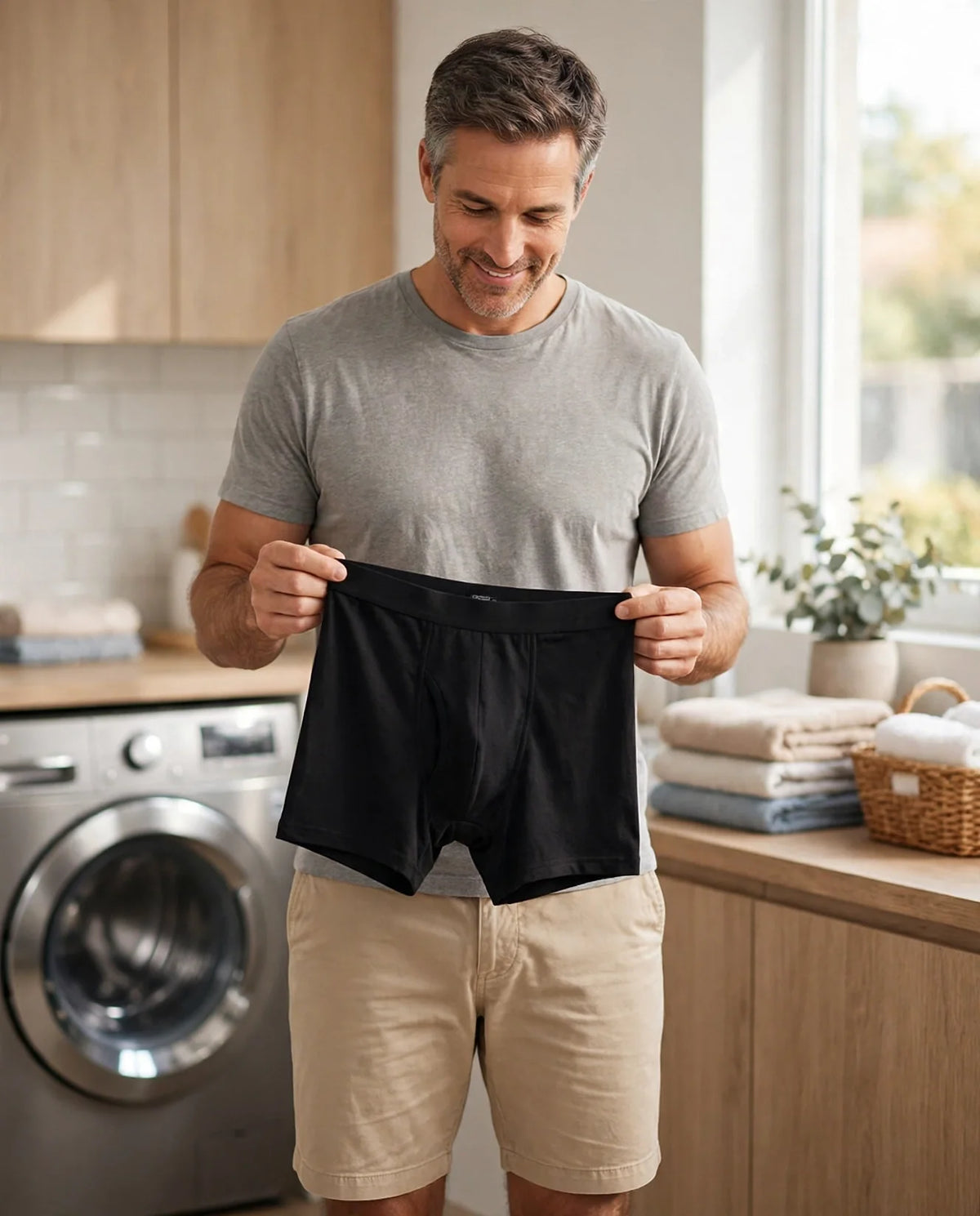
The short answer: It depends on the product. Incontinence pull-ups and briefs replace underwear — you don't wear regular underwear underneath them. Disposable pads, on the other hand, are designed to sit inside snug-fitting underwear. Mixing and matching the two can solve real problems (like overnight leaks), but only if you layer them the way each product was designed to work.
If you've ever wondered do you wear underwear with incontinence briefs, you're far from alone. It's one of the most common questions first-time users ask — and getting the answer wrong leads to pads that bunch up, pull-ups that leak, and laundry you didn't sign up for. Let's sort it out.
How Each Incontinence Product Is Meant to Be Worn
Confusion usually starts because "incontinence products" is an umbrella term for things worn very differently. Here's the baseline:
- Pull-ups (protective underwear): Worn instead of underwear. They pull on like regular underwear and are complete on their own — no underwear underneath, no pad needed inside.
- Tape-on briefs/diapers: Also worn instead of underwear. Nothing underneath.
- Adhesive incontinence pads: Designed to sit inside close-fitting underwear. The underwear isn't optional — it's what holds the pad in place.
- Washable leakproof underwear: Works like regular underwear with built-in absorbency. Nothing underneath, and usually no separate pad needed. Some designs pair with a removable booster pad for heavier days.
- Booster pads (flow-through pads): Made to be layered inside a brief or pull-up — not inside regular underwear — to add absorbency for longer wear or overnight.
Do You Wear Underwear Inside a Pull-Up?
No. A pull-up is your underwear for that wear cycle. Adding regular underwear underneath creates bulk, shifts the pull-up out of position, and can actually make leaks more likely by breaking the seal around the legs.
The one exception: some people wear a snug pair of underwear over a pull-up to keep it held close to the body, especially at night or during activity. This doesn't hurt, and it can reduce rustling and shifting. But underwear underneath a pull-up or brief serves no purpose and usually just adds discomfort.
Can You Wear Incontinence Underwear Over Regular Underwear?
This question comes up a lot with washable leakproof underwear — and the answer is also no, at least not as a routine. Wearing a regular pair underneath:
- Blocks urine from reaching the absorbent layer, so it pools and wicks outward.
- Adds a second seam line, which can chafe and press on sensitive skin.
- Defeats the whole point of the product's stay-dry top layer.
One regular pair of underwear, worn normally, with an adhesive pad inside it — or one pair of washable leakproof underwear on its own — both beat two pairs worn together. If one layer isn't holding, the fix is more absorbency (a heavier pad, a higher-absorbency style), not more layers of underwear.
When Layering Actually Makes Sense
Layering isn't always wrong — it's about layering the right products:
- A booster pad inside a brief or pull-up: A legitimate way to extend wear time, especially overnight. Booster pads are designed with flow-through topsheets that pass liquid into the brief below, so they don't create the trapping problem that two briefs would.
- A removable absorbent pad inside washable underwear: Some reusable systems, like the men's style with a removable pad, are built exactly for this — the pad slots in and out so you can adjust absorbency without changing the whole pair.
- A washable pad inside regular snug underwear: Reusable pads such as a high-absorbency reusable pad sit inside close-fitting underwear the same way a disposable adhesive pad does.
Side-by-Side: What's Worn With What
| Product | Worn with | Underwear underneath? |
|---|---|---|
| Pull-ups (protective underwear) | Nothing — they are the underwear | No |
| Tape-on briefs | Nothing — worn on their own | No |
| Adhesive incontinence pads | Snug-fitting regular underwear | Yes — required |
| Booster (flow-through) pads | Inside a brief or pull-up | N/A — layered inside another product |
| Washable leakproof underwear | Nothing — built-in absorbency | No |
Common Layering Mistakes (and Easy Fixes)
- Two pads stacked in one pair of underwear. The top pad's waterproof backing blocks flow to the lower pad, so the top one saturates while the bottom one stays dry — and you still leak. Use one correctly-sized pad, or switch to a booster pad designed for stacking.
- A pad in loose, stretchy underwear. The pad migrates, bunches, and leaks at the edges. Pads need snug cotton underwear (or brief-style underwear) that holds them flat against the body.
- Underwear underneath a pull-up. Creates gaps at the leg cuffs — the most common leak point. Take the underwear off.
- Doubling up pull-ups for heavy nights. Two waterproof layers trap moisture against skin and almost always leak worse than one brief plus a booster pad. If nights are heavy, that combination is the better engineered solution.
What About Changing and Carrying Spares?
Knowing what goes with what also makes the practical side easier. When you head out, you only need one complete system per change: one pull-up, or one pad plus one pair of snug underwear. A waterproof carry pouch keeps a fresh set discreet in your bag, and a machine-wash laundry bag handles the used reusables without extra fuss. For a deeper comparison of the two main systems, see Incontinence Pads vs. Leakproof Underwear: Which Should You Choose?

Frequently Asked Questions
Do you wear underwear with incontinence briefs?
No — incontinence briefs and pull-ups are designed to be worn on their own, replacing regular underwear entirely. Wearing underwear underneath adds bulk and can break the leg seals, which increases the chance of leaks.
Can you wear incontinence underwear over regular underwear?
It's not recommended. Washable leakproof underwear works because urine passes through the stay-dry layer into the absorbent core; a regular pair underneath blocks that path. If absorbency feels insufficient, size up the absorbency level rather than adding a layer.
Do you wear underwear inside a pull-up?
No. Nothing goes inside or underneath a pull-up except, in some cases, a booster pad designed for that purpose. Regular underwear inside a pull-up causes shifting and gaps at the leg cuffs.
How do you keep incontinence pads from moving around?
Wear snug, close-fitting cotton underwear — not loose boxers or stretchy seamless styles. Briefs or boy-shorts hold adhesive pads flattest. Also make sure the pad is centered and the adhesive backing is fully attached before you dress.
Can you layer two incontinence pads for extra protection?
Generally no. Two standard pads don't work together because each has a waterproof backing that blocks flow into the lower pad. For more capacity, use a booster (flow-through) pad inside a brief, or move to a higher-absorbency product.
Is it okay to wear a pad and leakproof underwear at the same time?
Usually unnecessary — and sometimes counterproductive. Leakproof underwear already includes an absorbent core, so adding a pad on top can block the stay-dry layer. The exception is a system designed for it, like underwear with a removable pad pocket, where the pad is meant to sit in a specific place.
Getting the layering right turns a fiddly routine into something you barely think about. Start with the simplest correct setup — one product worn the way it was designed — and only add layers when there's a specific reason, like overnight coverage. For help building a full rotation so you're never caught short, see How Many Pairs of Incontinence Underwear Do You Need? and How to Wash and Care for Reusable Bladder Leak Underwear.



Share:
How Long Do Reusable Incontinence Underwear Last? Signs It's Time to Replace Them
How Do You Know When Incontinence Underwear Is Full? Signs It's Time to Change