

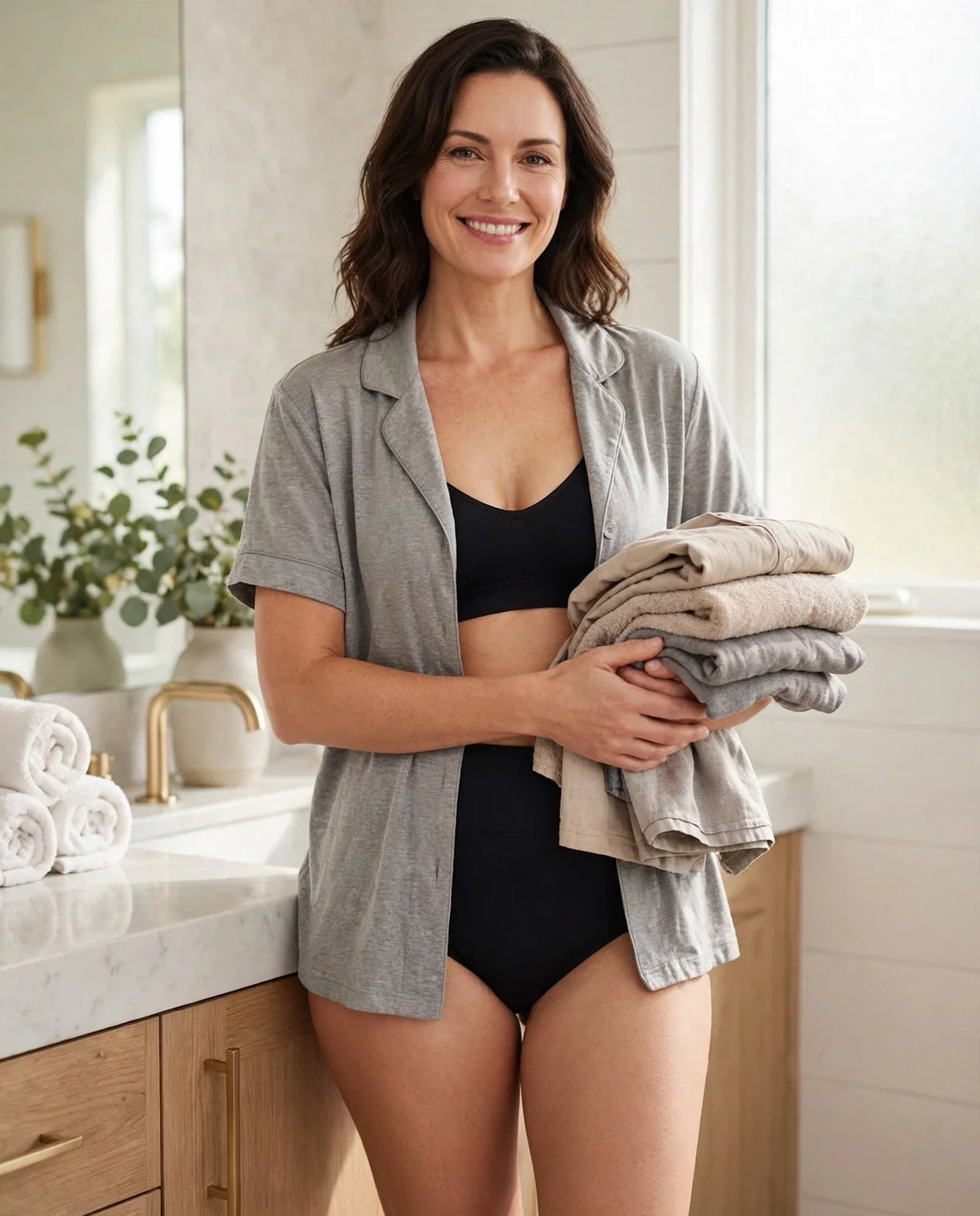
The short answer: Yes — for many women, washable leakproof underwear designed for bladder leaks can also handle menstrual flow, especially on light to moderate days. The same multi-layer construction that traps urine also absorbs period blood, which is why one pair can cover both needs during the week your period and leaks overlap.
If you manage both bladder leaks and a menstrual cycle, you already know how frustrating it can be: two separate sets of products, twice the waste, and a bag that always seems to need restocking. This guide explains when leakproof underwear can safely replace or reduce period products, how the absorbency works, and what to look for so you stay comfortable and confident all month.

Why Bladder Leaks and Periods Often Show Up Together
It is no coincidence that leaks get worse around menstruation. Falling estrogen in the late luteal phase and the first days of a period can make the bladder more irritable, and many women notice more urgency or stress leaks right before and during their period. Cramping, bloating, and water retention add pressure to the pelvic floor too. (We covered the hormonal side in detail in our guide to why bladder leaks get worse before your period.)
Practically, that means one product doing double duty is not just convenient — it is often the smarter setup for that week.
How Leakproof Underwear Handles Two Kinds of Flow
Leakproof underwear is built in layers: a moisture-wicking top layer that keeps skin dry, an absorbent middle core, and a waterproof backing that stops anything reaching your clothes. That system was engineered for urine, but absorbency does not care about the source — blood is absorbed by the same core.
| What to compare | Bladder leaks | Menstrual flow |
|---|---|---|
| Typical volume per episode | A few drops to several ounces per leak | About 2–4 tablespoons over a full day |
| Flow pattern | Sudden, unpredictable gushes or dribbles | Steady, gradual, and predictable |
| What absorbency is rated for | Light, moderate, or heavy leak levels | Most period days fall within "light to moderate" leak ratings |
| Odor | Needs odor-neutralizing layers | Same layers help contain period odor too |
The takeaway: on light to moderate flow days, a pair rated for moderate bladder leaks usually has plenty of capacity. On your heaviest day, you may prefer your highest-absorbency pair, or pairing it with a menstrual cup or tampon for backup.
What to Look For When One Pair Does Both Jobs
Not every pair is equally suited to period days. Three features matter most:
1. Enough absorbency for the full day
Check the product's absorbency rating rather than assuming. A moderate-rated pair is the sweet spot for most period days. If you leak heavily as well as bleed heavily, size up to the heaviest option available.
2. Coverage where you need it
Period flow moves differently than leaks — more toward the back when you are lying down, more forward coverage when you are seated all day. High-waisted styles with extended gussets give the widest margin. The washable high-waisted underwear is designed exactly this way, which is why it works well for both needs.
3. A snug but comfortable fit
Gaps at the leg openings are the number one cause of side leaks — for urine and for blood alike. If you are between sizes and plan to use the pair for period days, many women find the smaller size stays sealed better. The right fit also prevents chafing when the pair is worn for 8–12 hours.
Practical Tips for Period Weeks
- Rotate three to four pairs. On period days you will change pairs roughly as often as you would change a pad — having a few in rotation means you are never caught without a clean one.
- Rinse before you wash. A quick cold rinse keeps blood from setting, then wash with the rest of your laundry as usual. Our full washing and care guide covers detergents, drying, and odor control.
- Bring a wet bag. A mesh laundry bag in your work tote and a waterproof carry pouch for used pairs make midday changes discreet — no wrapping anything in toilet paper and hoping for the best.
- Have a backup plan for your heaviest day. Even enthusiastic converts keep a menstrual cup or a couple of pads on hand for the one day a month when flow peaks. Leakproof underwear covers the other four to six days beautifully.
- Track your own pattern. The first cycle is an experiment: note which pair you wore, how long it lasted, and whether you needed backup. By month two you will have a routine.
Is It Hygienic to Use One Pair for Both?
Yes, provided you treat period days like any other use: change the pair when it reaches capacity, rinse promptly, and wash thoroughly. The antimicrobial and odor-control treatments in the fabric are the same whether the fluid is urine or blood. The one rule that does not change: never wear the same pair longer than about 12 hours, and swap sooner on heavy days.
Related Reading
- Why Do Bladder Leaks Get Worse Before Your Period?
- Incontinence Pads vs. Leakproof Underwear: Which Should You Choose?
- Disposable vs. Reusable Incontinence Underwear: Cost, Comfort, and Sustainability Compared
- How to Wash and Care for Reusable Bladder Leak Underwear
FAQ
Can leakproof underwear fully replace pads or tampons?
On light to moderate flow days, yes — many women use nothing else. On heavy days, most people pair leakproof underwear with a cup or tampon as backup. It replaces the bulk of your period products rather than literally all of them, and it cuts waste and cost significantly either way.
Will period blood damage the absorbent layers?
No, if you rinse in cold water before washing. Hot water can set blood stains, so the only special step is a cold rinse. The layers themselves absorb blood the same way they absorb urine.
How many pairs do I need if I use them for periods and leaks?
Most women land on five to seven pairs total: enough to rotate through period week plus daily leak protection without doing laundry every night. Start with three and add more once you know your pattern.
Can I wear them overnight during my period?
Yes — overnight is actually where leakproof underwear shines, because the extended rear coverage protects sheets while you sleep, and you avoid waking up to change a pad. Choose your highest-absorbency pair for the night.
Is it safe to wear the same pair all day at work?
Up to 8–12 hours on light to moderate days is the common range. On heavy days, plan one midday change and bring a waterproof pouch for the used pair. If the pair feels saturated or damp against your skin, change it sooner.



Share:
How Does an Enlarged Prostate Cause Bladder Leaks? What Men Over 50 Should Know
Can Losing Weight Improve Bladder Leaks? What the Research Says