

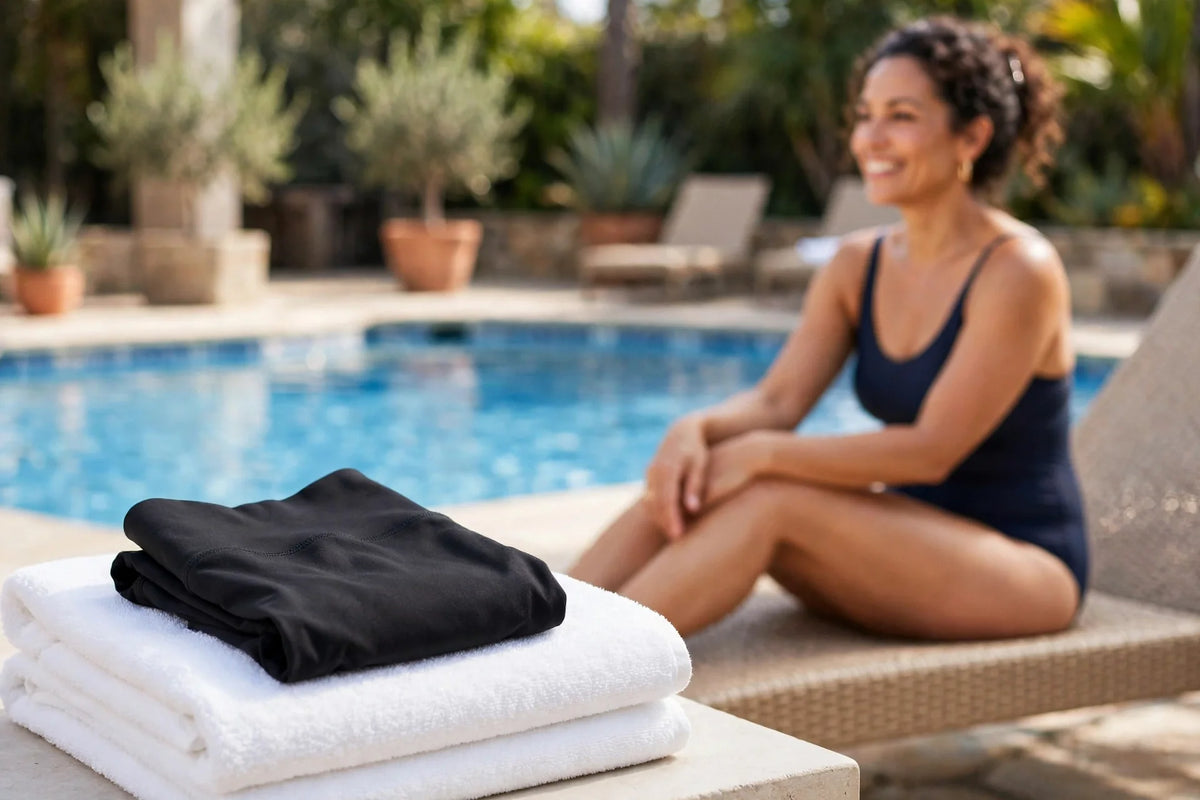
The short answer: You can swim with bladder leaks — but standard incontinence underwear isn't made to be worn in the water. If you're wondering can you swim with incontinence underwear, the key distinction is this: reusable leakproof underwear works beautifully for the hours around the swim — poolside, the changing room, the drive home — while the water itself needs a different plan. This guide walks you through what works, what doesn't, and how to enjoy the pool or beach with confidence.

Can You Swim With Incontinence Underwear? The Honest Answer
Swimming is one of the best forms of exercise for people with bladder leaks. The water supports your body weight, there's no pounding impact like running, and the buoyancy takes pressure off the pelvic floor. Many people are surprised to learn that pool time is actually one of the easiest workouts to manage leaks in.
But here's the catch: absorbent incontinence underwear — washable or disposable — is designed to absorb liquid. In a pool, it will do exactly what it's designed to do: soak up water. Within minutes, a pair of reusable leakproof underwear can absorb its full capacity of pool water, leaving you wearing something heavy, soggy, and no longer able to protect you when it matters. Disposable options are even worse — they swell dramatically and can even break apart in the water.
So the practical answer: wear your leakproof underwear to the pool and after the swim, and use a water-appropriate strategy during the swim. That combination gives you full-day confidence without fighting physics.
Why Water Changes Everything for Absorbent Products
The absorbent layers in leakproof underwear can't tell urine apart from pool water — liquid is liquid. This is the same principle that makes them reliable on land: whatever contacts the absorbent zone gets locked away. In water, three things happen:
- Premature saturation: the core fills with pool or sea water, so by the time you exit the water, the underwear has little or no capacity left for actual leaks.
- Weight and drag: saturated underwear gets heavy and uncomfortable, and it doesn't exactly flatter your swimsuit silhouette.
- Hygiene: a saturated absorbent layer sits against your skin longer than intended, which can cause chafing or irritation.
This is why product claims sometimes get misunderstood. Leakproof underwear that excels at daily life — the office, errands, sleeping — isn't the right tool inside the water. Think of it like hiking boots: perfect for the trail, not for the pool.
What to Wear Swimming With Urinary Incontinence
Here's how the realistic options compare for the swim itself versus the hours around it:
| Strategy | Works in water? | Best for | Limitations |
|---|---|---|---|
| Swim diapers / swim-specific incontinence briefs | Yes | Swimming laps, beach days, water aerobics | Contain solids and slow leaks; not fully leakproof for urine |
| Neoprene swim cover shorts | Yes | Adding a discreet barrier over swimwear | Best for light leaks; works best as an outer layer |
| Dark, snug-fitting swimwear | Yes | Camouflaging small leaks during short swims | No real containment; a confidence aid, not protection |
| Reusable leakproof underwear (worn before and after) | No — don't wear in water | Poolside, changing room, travel to/from the venue | Absorbs pool water if submerged; save its capacity for land |
| Disposable pads or pull-ups | No | Land-based backup only | Swell, disintegrate, and create a visible mess in water |
A practical setup many swimmers swear by: swim diaper or snug swim cover in the water, then towel off and change straight into dry, reusable leakproof underwear out of the water. This covers the two windows where leaks are most likely — the changing room queue and the car ride home.
Practical Tips for a Swim Day With Bladder Leaks
1. Empty your bladder right before swimming. Cold water and pressure changes can trigger urgency (that "latchkey" feeling the moment you're near water). A pre-swim bathroom trip cuts your risk dramatically.
2. Wear leakproof underwear for the journey. Pull on your reusable pair before leaving the house. They're comfortable enough for the drive and give you protection through the changing room — which is honestly where most swim-day anxiety lives.
3. Pack a wet bag. A waterproof carry pouch keeps your damp swimwear and your dry underwear separate in the same bag. Toss in a spare pair of leakproof underwear too — changing into a fresh, dry pair after swimming is one of the simplest confidence boosts there is.
4. Choose your swimwear strategically. Dark colors and snug (not tight) fits are more forgiving. Some people layer a swim skirt or rash guard for extra peace of mind. If you're doing water aerobics or a leisurely swim, a neoprene cover over your suit adds a subtle extra barrier.
5. Time your fluids. Drink normally — don't dehydrate yourself before swimming, since concentrated urine irritates the bladder and can worsen urgency. Just front-load hydration earlier in the day and ease off in the 30 minutes before your swim.
6. Know where the bathrooms are. Scout the pool deck or beach boardwalk facilities when you arrive. For open-water swims, plan your entry point near public restrooms. Preparation beats panic every time.
After the Swim: Caring for Your Reusable Underwear
If your underwear ever does get wet from splashing or a light dousing, the care routine matters. Rinse it in cool water as soon as you can — chlorine and salt water left sitting in absorbent fabrics can degrade the fibers over time. Toss it in a mesh laundry bag and machine wash as usual; our full washing guide has the details. Avoid the dryer on high heat, and never use fabric softener, which clogs the absorbent layer.
One thing worth noting: chlorine exposure from a brief poolside splash is nothing like chlorine soaking. A splash rinsed off promptly is a non-issue. Regular full submersion, however, is why we don't recommend these as swimwear — the absorbent core simply isn't built for it. If you're comparing approaches overall, our disposable vs. reusable comparison covers how the two hold up in everyday use.
A Quick Note for Men
Men navigating swim days have the same options. Reusable leakproof underwear for men works the same way — excellent protection for the journey and the changing room, not a swimsuit replacement. Swim trunks with a snug mesh liner plus a swim-specific brief underneath is a common, discreet combination. More on active scenarios in our exercise and leaks guide.
FAQ
Can you wear incontinence underwear in the pool?
Standard absorbent incontinence underwear should not be worn in the pool. It will absorb pool water until saturated, becoming heavy and losing all capacity for actual leaks. Use swim-specific products in the water instead, and save leakproof underwear for before and after your swim.
Do leakproof underwear work in water?
No — leakproof underwear works by absorbing liquid, and it can't distinguish urine from pool water. Once submerged, the absorbent core fills with water and stops functioning as leak protection. They're designed for dry-land use, where they work excellently.
How do I swim with bladder leaks if I have urge incontinence?
Use the bathroom immediately before entering the water, and consider a swim-specific incontinence brief or snug swimwear for the swim itself. Change into dry, reusable leakproof underwear right after. Many swimmers with urgency also avoid very cold water at first entry, since cold can trigger the urge.
What should I wear swimming with urinary incontinence?
A layered approach works best: swim-specific incontinence briefs or a neoprene swim cover under dark, snug swimwear in the water; then dry, reusable leakproof underwear like leakproof underwear for women for poolside, changing, and the trip home.
Does chlorine affect reusable incontinence underwear?
Brief chlorine exposure — a splash rinsed off promptly — is not a concern. What matters is not soaking the absorbent core in pool water, which saturates it and renders it temporarily useless. Rinse swim-day splashes in cool water and wash normally.
Is swimming good exercise if I leak when I exercise?
Yes — swimming is one of the most leak-friendly workouts there is. The water supports your body and removes the high-impact jolts that trigger stress leaks when running or jumping. Pair it with travel-day leak strategies for beach trips or pool outings farther from home.



Share:
How Many Pairs of Incontinence Underwear Do You Need? A Simple Guide to Stocking Your Drawer
How Long Do Reusable Incontinence Underwear Last? Signs It's Time to Replace Them