


The short answer: Yes, you can work out at the gym with bladder leaks — you just need a plan for the three moments that trip most people up: the right base layer, a fuss-free locker-room change, and knowing what to do if a leak happens mid-class. Dark bottoms, washable leakproof underwear, and a small gym-bag kit cover nearly all of it.
The gym is one of the most common places for leaks to show up — and one of the easiest to manage, because you control everything: what you wear, where you stand, and your bag. Here's how to manage bladder leaks at the gym so the workout is the hard part, not the worry.

Why does the gym trigger leaks in the first place?
Most gym leaks are stress leaks. A jump, a squat, a sneeze on the treadmill — anything that spikes pressure inside your belly can push a little urine out before your pelvic floor catches it. Running is the classic trigger; so are box jumps, burpees, and heavy deadlifts. Even laughing between sets can do it.
It doesn't mean something is broken. Pelvic floor muscles get weaker after childbirth, with age, after prostate surgery, or just from years of sitting at a desk — and they react a fraction too slowly under sudden load. If you want the fuller picture, this guide to bladder leaks during exercise covers the mechanics in plain language.
If leaks started suddenly, or come with pain, blood, or burning when you pee, call your doctor before your next session. That's a different conversation.
What should I wear to the gym if I leak?
Start from the skin out. Your base layer does the real work; everything else is camouflage.
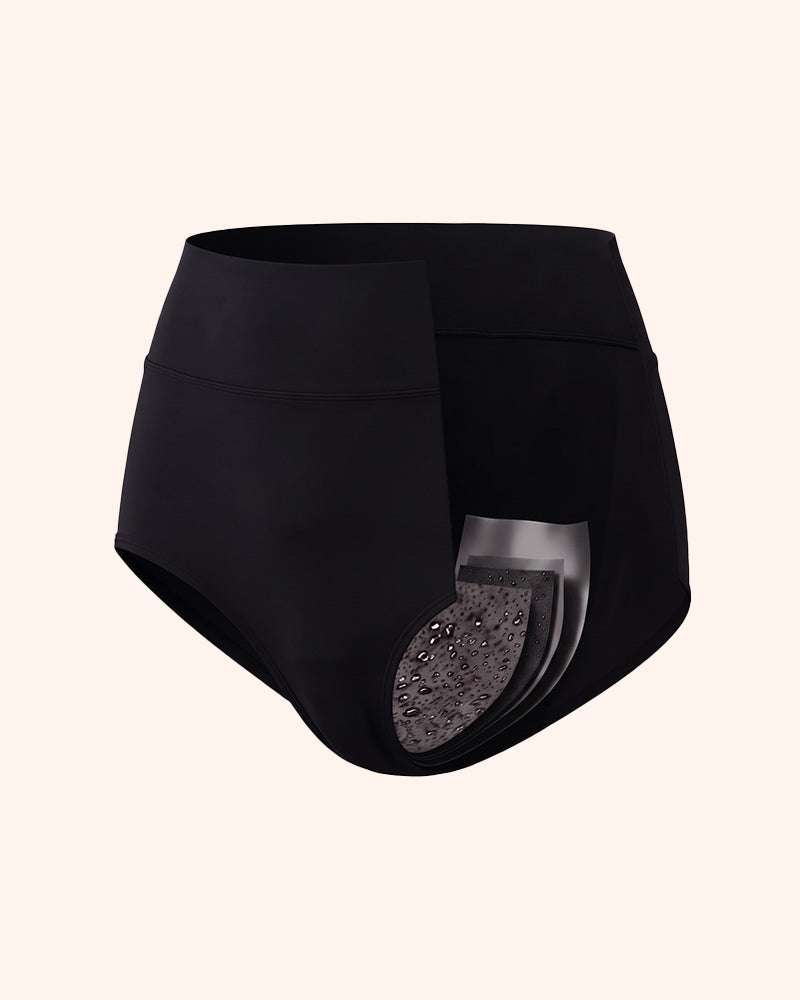
Washable leakproof underwear is the simplest base layer for light to moderate leaks. It looks and feels like normal underwear, holds a few small leaks, and washes with your gym kit. The women's Stay Discreet underwear sits flat under leggings without a visible line, and the men's version works the same way under shorts. Pick your normal size — too tight digs in by the third set; too loose and the panel shifts when you move.
Over that, go dark on the bottom. Black or navy leggings hide a damp patch far better than grey marl, which shows every drop. A longer top helps too — a tee that covers your hips gives extra cover if anything gets through, and nobody thinks twice about it.
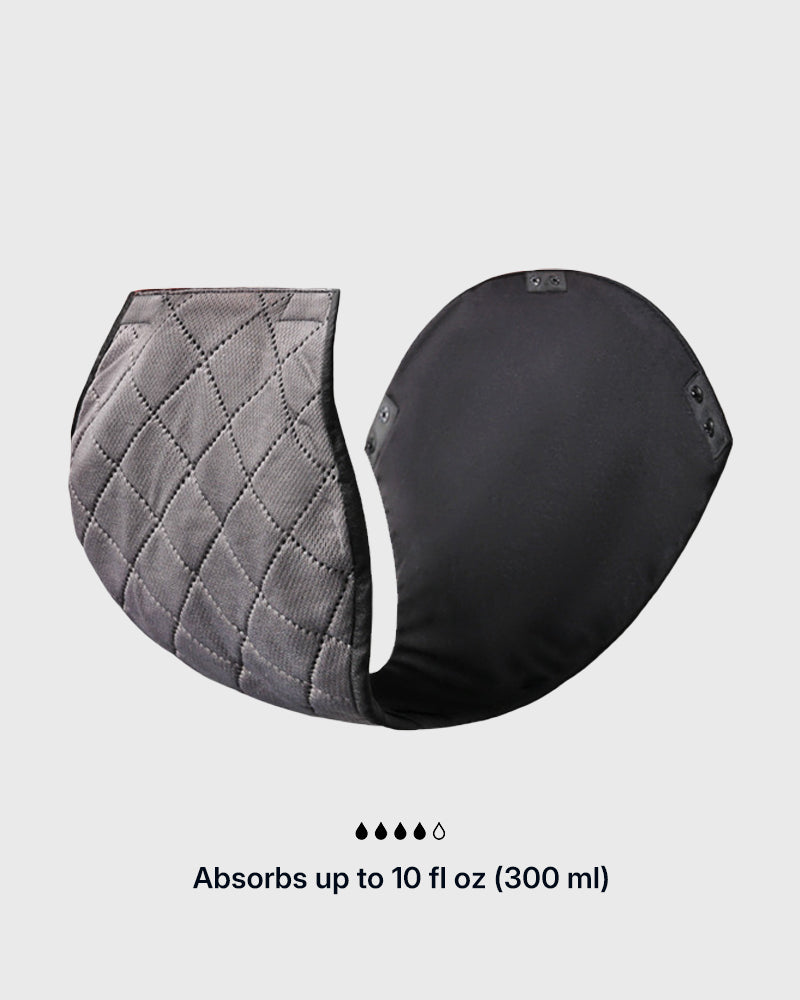
Skip pads in regular underwear on high-impact days — they bunch up when you squat, and once one folds over it stops working. A booster pad inside leakproof underwear stays put far better.
How do I handle the locker room?
The locker room is where most of the anxiety lives. Not the workout — the changing.
Two tricks make it boringly easy. First, change at home when you can — drive over already dressed and the locker room is just somewhere to stash your bag. Second, if you do change there, grab an end locker near the showers or the family cubicle. Most gyms have at least one curtained spot; ask at reception once and you'll know where it is forever.
Carry a spare pair in a small waterproof pouch. If you leak mid-workout, swap the pair, seal the damp one in the pouch, and drop it in your bag — no smell, no wet patch spreading through your kit. This everyday carry guide for bladder leaks covers what else earns a spot in your bag.
Which workouts are easiest on your bladder?
Not all gym sessions load your pelvic floor the same way — start gentle, then test the harder stuff on days with a spare pair and a bathroom nearby.
| Workout | Leak risk | Why |
|---|---|---|
| Walking, slow cycling | Low | Steady movement, no sudden pressure spikes |
| Swimming, yoga, Pilates | Low to medium | Gentle; some poses raise belly pressure briefly |
| Weight machines, light strength work | Medium | Fine if you breathe out on the effort |
| Running, spin class, HIIT | Higher | Repeated impact loads the pelvic floor most |
That doesn't mean giving up the treadmill — build up to it. Try ten minutes of jogging first, with a bathroom stop planned halfway. Dry? Stretch it to fifteen next time. Loads of people work back to their old routine this way; they just don't announce it.
One habit pays off fast: breathe out as you lift. Holding your breath while you push a weight shoves pressure straight onto your bladder. Exhale on the hard part and the leak risk drops on the spot.
What goes in my gym bag?
Keep it small enough to pack in thirty seconds. Anything more complicated and you'll stop doing it.
- A spare pair of leakproof underwear, folded flat
- The waterproof pouch for the damp pair
- A small pack of unscented wipes for a quick freshen-up
- A spare pair of dark leggings or shorts, just in case
- Your water bottle — don't skip drinking to dodge leaks; dehydration can make urgency worse
That's it — five things, fitting in the side pocket of most gym bags. Once it's packed you can stop thinking about it.
What if I leak in the middle of a class?
It happens. A jumping jack in a 6 a.m. spin class, a laugh during Tuesday night yoga — the timing is never convenient.
Don't freeze. Walk out calmly, the way anyone would to grab water. Head to the restroom, swap the pair from your pouch, wipe down, and go back in. Most people won't notice. If it soaked through to your leggings, tie a hoodie around your waist — gyms are full of people doing exactly that.
And if it rattles you enough that you want to leave — leave. One cut-short session isn't a failure. You showed up. Next time, pick a spot near the door and wear the darker bottoms. Small tweaks, not big overhauls, are what make the gym feel safe again.
How do I wash gym-day underwear?
Same as any other day, with one extra step: rinse the pair in cold water as soon as you're home, before it sits in the pile. A quick rinse keeps odour from setting in, then it goes in the machine on a normal cold cycle. A mesh laundry bag keeps the absorbent layers from snagging on zips and Velcro.
Skip fabric softener and skip the dryer: heat breaks down the waterproof layer over time, and softener coats the absorbent fibres so they hold less. Hang them to dry — most pairs are dry by morning. The full care routine is in this washing guide for reusable leakproof underwear.
If you go to the gym most days, keep at least three pairs in rotation: one on you, one in the wash, one dry in the drawer. Running out is how people end up back in disposables — or skipping the gym entirely. This guide to choosing incontinence underwear covers sizing and stocking, and this piece on wearing it every day covers hygiene and skin health.
How to manage bladder leaks at the gym: questions people ask first
Can I wear leakproof underwear to the gym?
Yes. That's what it's built for. Pick a pair in your normal size, wear dark bottoms over it, and pack a spare — if you're looking up how to manage bladder leaks at the gym, that trio is most of the answer.
How do I stop bladder leaks when I run on the treadmill?
Start short — ten minutes at an easy pace — and empty your bladder right before you start. If leaks keep happening, drop to a fast walk on an incline for a few weeks, then test the jog again.
Is it OK to work out with bladder leaks?
For most people, yes — staying active helps, since stronger legs and core take load off the pelvic floor. The exception is pain, blood, fever, or a sudden change. Then get checked before your next session.
What if I leak during a group fitness class?
Slip out the way you'd slip out for water, change in the restroom using the spare pair in your bag, and rejoin the class. Sitting near the door is one of the easiest tricks for how to manage bladder leaks at the gym, and dark bottoms mean a small leak rarely shows at all.
Do I need a pad as well as leakproof underwear at the gym?
Not usually. A well-fitting pair handles light to moderate leaks on its own. On a heavy day — a HIIT class, say — a booster pad inside the underwear adds backup without the bunching of a pad in regular underwear.
The gym doesn't have to be the place you avoid. Get the base layer right, pack the five-item kit, pick your spot near the door. The workout will still be the hardest part of the morning — which is exactly how it should be.

Share:
How to Manage Bladder Leaks in a Wheelchair: Practical Tips for Everyday Outings
How to Manage Bladder Leaks While Shopping: Fitting Rooms, Checkout Lines, and Long Trips to the Mall